-
Forrest Aguirre
This one goes straight to my writer’s reference shelf
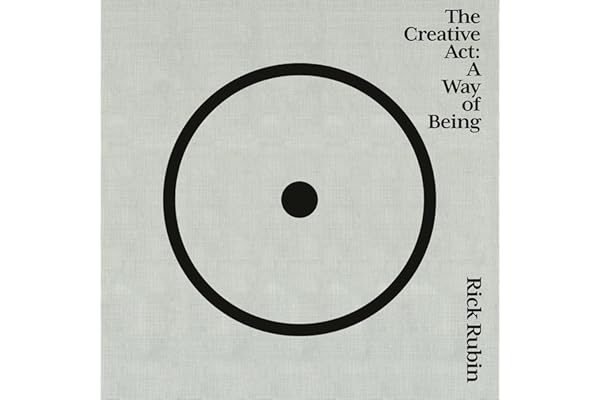
I studiously avoided reading reviews of this book until I was done because I (correctly) predicted there would be those who praised it as a new book of holy scripture and those who would utterly trash the work as thin and inconsequential. Neither of those two camps is right. And while I do not condone tossing a book before you’ve given it a fair chance (though I have utterly given up on a book or two, opinions will differ on what a fair chance is. I can see the naysayers who feel that the book is a bunch of twitter quotes strung together, and I can even see why people who went into it not expecting a philosophically-oriented book would be turned off to it (though why you would think that a book about creativity would NOT have a philosophical orientation is beyond me). That said, I lean towards the cult of those who sing this books praises. I’m not all-in drinking the Kool-Aid, but I am at the edge of the clearing watching everyone line up, considering.If one reads the book to the end, one finds the admission:You are you.The work is the work.Each person in the audience is themselves. Uniquely so.none of it can truly be understood, let alone distilled to simple equations or common language.And herein lies the heart of the matter. Creativity is very difficult to pin down. There are exceptions and contradictions. What works one time doesn’t work the next. That’s the whole point of creativity. If you’re looking for an end-all-be-all truth, study Accounting. Paint-by-numbers is not creativity, and it never was. It’s good practice, and one can learn principles from it, but the true teachers in creative acts are experience, intuition, and failure.Rubin does, however, share practical ways of thinking/being for those who might be struggling through the creative process. He also shares ways to ensure that you are creating good art when you think you’ve got a finished product. Any writer who’s been writing for a while will tell you that the most difficult part of writing is editing. And if they don’t, you can bet that their work shows it. I can categorically state that my early work, even those for which I was paid good money, could stand another edit. Or two. Or ten. Here Rubin doesn’t spare the rod, but reminds us of our responsibility to create the best work we can, while giving us some tools to work with.Now many of these tools come in the last third of the book, but if one doesn’t buy into the foundational principles (remember that old concept of “willing suspension of disbelief”?), then the latter parts of the book are going to be far less impactful. No, you don’t have to drink all the Kool-Aid, but you have to be willing to read and observe with an open mind. If you can’t at least accept, theoretically, that “art is our portal to the unseen world,” then this book is not for you. But if you’ll give that thought a serious chance, the rest of the book will make sense to you. Again, if you want paint-by-numbers-so-you-can-monetize-everything-with-high-productivity, you need to look elsewhere.If you’re onboard with exercising a little faith, you’ll be able to grok the book. The practicum really starts with the chapter on “Seeds,” about a third of the way in. From here to the end, I’ve marked so many passages and taken so many notes that I won’t take the time to put them all (if any) into this review. I’ve begun marking it up (in pencil – yes, I write in my books) with marginal notes, much like the ancient rabbinical scholars used to litter a verse of scripture with their annotations. As a result, this book has become highly personal to me and will continue to do so as I revisit it. It serves as a mirror to my own creative process, revealing all of its beauty and flaws. I will gaze into this book many times in the future both for inspiration and for practical solutions when I’m stuck (and there are many methods given for how to become un-stuck in the last third of the book).I have a handful of reference books that I keep “hot at hand” in my writing area. An old Roget’s Thesaurus, Tim D. White’s Human Osteology, Francis D.K. Ching’s A Visual Dictionary of Architecture, and now: Rick Rubin’s The Creative Act: A Way of Being.
-
Nikolai
The most insightful book on art creation
Rick Rubin knows how to create art. He also knows how others create art, in this case it’s even more important – his observations lead to very deep and profound conclusions on what does it mean being and artist and how do you approach making great art. A must read.
-
MichSSF
Great book!
Easy to read and very insightful. It’s an eloquent reminder that creativity starts with awareness, truth, and trust in the process… with more intention and calm. Less chasing trends, more creating what resonates. Quiet, wise, and grounding—this one stays on my desk.
-
Luz M. gomez
BUY IT !!!!
AMAZING AMAZING BOOK! I’m not even kidding as an artist this book opened my eyes. I checked out this book at the library and after reading it I had to buy it so I can keep it forever!
-
Justin Morrison
An Open Mind, Guys.
I’m a lifelong musician, composer, creative, performer, etc. This book has always been recommended to me by colleagues, and I thoroughly enjoyed it. I agree with many of the common points that came up in the majority of reviews, and I’ll discuss them here:1. Perfect Coffee Table Book: Yes, this is a wonderful application. It’s an easy book to pick up, put down, and resume later. The chapters are short and are packed full of simple, quiet advice that you can consider and ponder throughout your day.2. It’s “the book”: This one depends where you are on your creative journey. I believe that I will read this book again, probably several times, in the future. There is a ton of excellent advise and wisdom in there, and reading through it quickly causes a lot of information to be passed over. It should be digested and internalized slowly. Most of the wisdom was old information that I’ve heard from teachers, colleagues, friends, or through personal musical discovery and experience. However, it’s invaluable to have these shared experiences collected in one place. If you are just starting out on your creative journey or don’t currently consider yourself a creative person, I expect that you’ll actually learn a lot from this book.3. The prose meanders. Yes, it does. I think you could largely read the chapters out of order and it wouldn’t matter. That’s okay – as Rick writes, language is an imperfect filter. Much of what he shares is a different viewpoint or expression of the same idea, so one chapter may be passed over while another may unlock something important in you. The whole book works together to instill growth, confidence, and creative openness – the colorful prose is a necessary feature.This is a book about growth that instills growth. It’s going to take time to marinate and be useful to your creative process. I will say that reading Rick’s knowledge has helped me find ways to streamline my personal writing process, trust the art, and better navigate roadblocks like doubt and lost direction. I’ve rated it four stars for its nature – it is not a solution, but a tool. A reference. I’ll use this book when I’m stuck in my creating. Maybe it will help, maybe it won’t, but something in it will help move the creative flow eventually.It’s also necessary to address several popular reviews that mention, and in some cases fixate, on religion. This is not a sacred text or religious doctrine. It is a way of structuring your life and workflow to increase and invite creative moments and creative energy to help you achieve your goals and be more creative. I can’t speak for Rick, but if you’re viewing everything he writes through a strict religious lens, you’re missing the entire point. It is frequently emphasized how important it is to have, nurture, and cultivate an open mind. To see and experience the world though many lenses and experiences. To explore diversity, open thought, and the self. To listen, observe, and connect with the world around us. Practicing these methods is necessary for encouraging creaticity. Reading this book through an extraordinarily narrow lens may help a little, but the majority of the contents will be misconstrued. There are a couple key chapters about that. 😉
-
T. Fargo
The Creative Act; A Wonderful Book!
One of the best books I’ve ever read! Very inspirational and uplifting! Easy to read and gives you confidence and reminders to just be yourself while expressing creativity. I’ll read this again and again…
-
Tracey Careaga
Epic book
I love this book. It has given me a new creative outlook, not just on art, but as a way of living. This is one book everyone should read.
-
CJD
Love this book. Unique & complex topics explained beautifully & simply
This book is filled with so much digestible, bite-sized information about creativity in art, business, or whatever you are pursuing.I highly recommend it. What a fun read.The author has the unique skill to explain extraordinarily complex terms in very simple language.I learned so much from this book.Highly recommend it to anyone and everyone.