Top 9 Best-Selling Money & Finance for November 2025

$11.81

Danh sách Top 10 Money & Finance bán chạy nhất tháng November 2025 được tổng hợp dựa trên dữ liệu thực tế từ Amazon.com. Các sản phẩm được đánh giá cao bởi hàng nghìn người dùng, với điểm rating trung bình từ 4.4 đến 4.7 sao. Hãy tham khảo danh sách dưới đây để chọn sản phẩm phù hợp với nhu cầu của bạn.

#1

The Psychology of Money: Timeless Lessons on Wealth, Greed, and Happiness
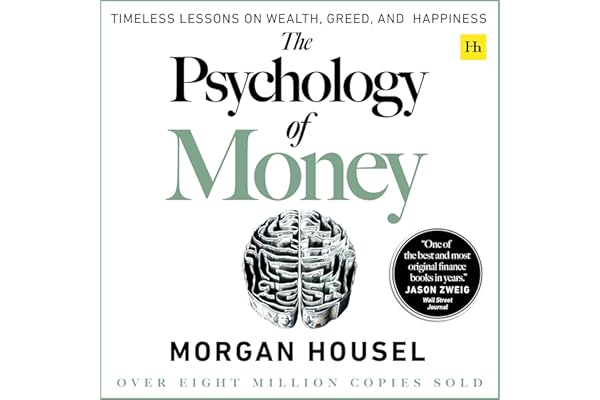
The Psychology of Money: Timeless Lessons on Wealth, Greed, and Happiness


Price: $17.46
4.7/5

(66,622 reviews)

What Customers Say:

  • Great for people who want to be Financially Insightful!
    Definitely a good book to start your financial literacy journey with! This book literally set the foundation of my new perspective on being more mindful with my money and my approach to when and how to save and spend! This book opens your eyes to concepts and ideas that improve your knowledge of financial literacy ultimately making you see earning money/spending money/budgeting money and money patterns throughout time in a whole new light! This book has been advertised all across YouTube and other social media outlets and as someone who has purchased the book, I can verify for you there’s a good reason for it! I certainly recommend.
  • Must read!
    Morgan is a GENIUS. His ability to present concepts and support them with relevant historical examples is nothing short of brilliant. This book is way more important and impactful than any book I was ever issued in school, 10 out of 10 recommend.
  • Sound Advise and an Enjoyable Read
    You’ve got to give the author credit. He’s pretty open, honest and straightforward how things really work. Food for thought and solid suggestions backed with experience and stories. Nobody has all the answers or the big secret. However, this book will get your wheels turning. That’s the real idea.
  • Best investment book
    I ordered seven investment books and read them all. This one is required reading for anyone interested in learning about money, the psychology of investing, thoughts on wealth, as well as other factors including the importance of money, happiness, and how we define success.
  • Very easy to read
    Enjoyed reading this. Very digestible and the writing style was easy to read. I enjoyed the stories and the overall lessons, especially the emphasis on savings.
  • Very very good.
    My background: financially unhealthy, controlling and financially abusive (by definition, not my diagnosis) upbringing.SO background: one parent financially astute but not at all risky and one who is a spending addict.This books seems mis-labeled to me. It is using the premise of finances and money as examples, but the focus is human psychology and what drives individuals. There is some study on financial habits of the financially successful. But overall, it is a study on human behavior and why we risk, what we risk versus why and what we stay safely away from risk.The books has been helpful in that I have had to deal with and work through my issues with money, trust issues with people and shedding some light into why it might be people do what they do.This books reminds me of ‘How to Win Friends and Influence people,’ in many ways. It is not like ‘Rich Dad Poor Dad.’Morgan Housel does an excellent job explaining why people risk what they do, and also don’t.Having completed a chapter 7 Bankruptcy in 2018 to buying a house (second starter home) in 2021… I hope to continue improving my personal financial world, and that of the world around me, for the sake of my kids and any future generations. This book does an excellent job continuing that education, and also my education in the psychology of humanity.Frankly, I can’t say enough about the book. It’s a good beach read, bored out of my mind read, need some challenge read, airplane read… whatever. Sitting at your desk or cubicle and need to preoccupy myself read.I will be adding a hardcover to my library. This would be a fantastic gift to those who have an interest in psychology or finances. Or anyone just interested in better understanding humanity. Frankly, it takes the glam out of “glamour” for me.The author humanized people. He doesn’t set them on a pedestal. He explains what they have done from a functional financial standpoint and then distinguishes that success is objective… or maybe that’s just my takeaway?Regardless, this book has certainly caused me to “Go home and rethink my life.”I highly, highly recommend it.Oh:~ Editing is phenomenal! I haven’t found a spelling or grammar mistake yet *starts screaming like a little girl*.~ Morgan Housel breaks down the psychology of what makes us… human: what happened to us impacts who we are and what we do. He further explains HOW and gives actual relatable examples.~ Stock Market and investing is a baby-new-world. Thank YOU! What worked yesterday will not, cannot work today or tomorrow because it is chronically changing, growing up, adjusting.~ Morgan Housel touches heavily on empathy and compassion. Respect, sir! Absolute respect!
  • Great book
    “The Psychology of Money” by Morgan Housel is a thought-provoking book that explores the complex relationship between money, greed, and happiness. Housel challenges conventional notions about wealth, arguing that it’s not just about smart decisions, but also about behavior and psychology ¹.The book is divided into 20 short chapters, each tackling a different aspect of money psychology. Housel uses engaging storytelling and real-life examples to illustrate his points, making the book an enjoyable read.One of the key takeaways from the book is the importance of understanding your own values and priorities when it comes to money. Housel argues that money is a reflection of our values, and that our financial decisions should align with what’s truly important to us ².The book also delves into the power of compounding, highlighting the benefits of long-term thinking and patient investing. Housel emphasizes that getting wealthy slowly is often a more sustainable and reliable approach than seeking overnight success ².Other notable themes in the book include the role of luck in financial outcomes, the dangers of complexity in financial decision-making, and the impact of stories and narratives on our financial behaviors ².Overall, “The Psychology of Money” is a insightful and accessible book that offers valuable lessons for anyone looking to improve their relationship with money. As one reviewer noted, “This book is the book I wish I had read when I was young” ¹.*Key Takeaways:*- *Money as a Reflection of Values*: Understand your own values and priorities when it comes to money.- *The Power of Compounding*: Long-term thinking and patient investing can lead to significant financial gains.- *The Role of Luck*: Recognize the influence of chance and unforeseen circumstances on financial outcomes.- *Simplicity over Complexity*: Avoid complex financial decisions and focus on simplicity and clarity.- *The Impact of Stories*: Be aware of how narratives and stories shape your financial behaviors and decisions.

The Psychology of Money: Timeless Lessons on Wealth, Greed, and Happiness is one of the best-selling products with 66622 reviews and a 4.7/5 star rating on Amazon.

Current Price: $17.46
#2

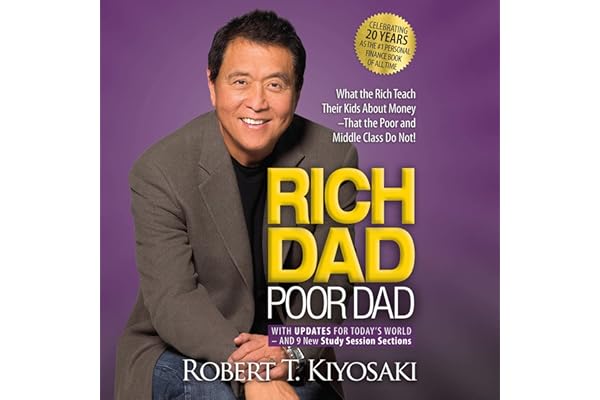
Rich Dad Poor Dad: 20th Anniversary Edition: What the Rich Teach Their Kids About Money That the Poor and Middle Class Do Not

Rich Dad Poor Dad: 20th Anniversary Edition: What the Rich Teach Their Kids About Money That the Poor and Middle Class Do Not


Price: $17.50
4.7/5

(105,365 reviews)

What Customers Say:

  • Buy this for your kids to read. It helps them to see the bigger picture in career planning.
    Great book for everyone to read!! Kids 10 and up and adults should all read it. It makes a great high school graduation mini gift. This is a book most colleg finance classes require. It teaches a great lesson and is written like a novel. Can be read quickly.
  • Best Gift for New Dads
    Great book… easy read.. and lots of great financial experience. I buy this for all my “new dad” friends.
  • Good read
    My friend recommended me this book, can’t wait, he said it’s a good read
  • Empowering Financial Wisdom – “Rich Dad Poor Dad” is a Must-Read!
    “Rich Dad Poor Dad” by Robert Kiyosaki is an extraordinary book that has truly changed my perspective on money, wealth, and financial literacy. This insightful and empowering read presents invaluable lessons that the rich teach their children about money, contrasting it with the mindset and beliefs commonly held by the poor and middle class. Allow me to share my experience with this life-changing book.First and foremost, the knowledge and wisdom imparted by Robert Kiyosaki in “Rich Dad Poor Dad” are eye-opening. Through relatable stories and personal experiences, Kiyosaki challenges conventional beliefs about money and unveils the fundamental principles of financial success. He emphasizes the importance of financial education, investment strategies, and building assets to create lasting wealth. These powerful lessons have inspired me to take control of my financial journey and make better choices for a prosperous future.The storytelling approach used in this book is exceptional. Kiyosaki narrates his childhood experiences, highlighting the contrasting financial mindsets of his own “poor dad” (his biological father) and his “rich dad” (his friend’s father). This storytelling style effectively communicates complex financial concepts in a relatable and engaging manner. It makes the book accessible to readers from all walks of life, regardless of their prior financial knowledge.The practicality of the lessons presented in “Rich Dad Poor Dad” is noteworthy. Kiyosaki not only shares insights but also provides actionable steps and strategies for readers to implement in their own lives. The book encourages readers to think critically about their financial decisions, challenge their beliefs about money, and take proactive steps towards financial freedom. It serves as a practical guide for individuals seeking to break free from the cycle of living paycheck to paycheck and create a solid financial foundation.Furthermore, the book’s emphasis on financial literacy is of immense value. Kiyosaki stresses the importance of acquiring financial knowledge and understanding the different forms of income, assets, and liabilities. This focus on education empowers readers to make informed financial decisions and take control of their financial destinies. It serves as a wake-up call to the significance of financial literacy in achieving long-term wealth and financial security.The impact of “Rich Dad Poor Dad” extends beyond personal finance. It challenges societal norms and encourages readers to question the traditional path of education and employment. Kiyosaki promotes entrepreneurship and encourages individuals to think outside the box, take calculated risks, and embrace the opportunities that come with financial independence. This book has the potential to reshape one’s mindset and open up a world of possibilities.Lastly, I must commend the author for his ability to inspire and motivate readers. Kiyosaki’s writing style is engaging, passionate, and thought-provoking. His genuine desire to empower others to achieve financial success shines through every page, making “Rich Dad Poor Dad” a truly transformative reading experience.In conclusion, “Rich Dad Poor Dad” is a must-read for anyone seeking to gain financial knowledge, reshape their mindset, and create a solid foundation for long-term wealth. Its empowering lessons, relatable storytelling, practicality, emphasis on financial literacy, and inspiring approach make it a book that has the potential to change lives. I highly recommend “Rich Dad Poor Dad” to individuals of all ages and financial backgrounds. Pick up this book, absorb its wisdom, and embark on a journey towards financial independence and abundance!
  • Good Book…well some of it anyway.
    The book arrived in good shape and was new as ordered so this review will be solely for the content of the book. The book has some useful information on how to build wealth and sustain it. The pages where financial education and the cashflow quadrant are important in order to be wealthy and understand money. Additionally, Kiyosaki stresses the importance of obtaining assets that build wealth and bring in income which is good advice as well. These tips make the book worth reading over at least once if not more. However, Kiyosaki also stresses that the K-12 education system, as well as college, keeps people “poor”, while it is true that school does not teach you about money, it doesn’t necessarily keep people poor. As for learning money in college, the “finance” majors would disagree in saying that school does not teach you about money. Furthermore, individuals that study medicine and become surgeons or other professionals in their field are not necessarily poor as well. Additionally, Kiyosaki claims that his doctorate father in Physics was “poor”. This is a big generalization because the chosen field of the doctorate degree also makes an impact on earnings as well as which field you go into after obtaining the docotrate. All being said, this book is definitely worth a decent read and I might also add that rule #1: “Rich don’t work for money” is true as employees can do the work for you and you pay them but when starting a business from the ground up, the initial 5-10 years give or take (based on the business type) is when you really have to work extremely hard to be able to make a profit to afford employees. This is true today as Apple, Amazon, and Microsoft all started from basically nothing to being the corporations they are now where they have thousands of employees. Additionally, having “money work for you” makes you dependent on your employees (corporations exempt of course) and you do have to treat them correctly, or else your money won’t work for you. So there are these nuances throughout the book with generalizations but it is still worth a good read.P.S. Kiyosaki’s own company went to bankruptcy and there is no documented reserve of wealth prior to his publication of this book in 1997.
  • Educational and helpful to any age
    This book is awesome and mind changing!
  • ????????????????????
    Life-Changing Perspective on Money and Wealth!

    Rich Dad Poor Dad” is a must-read for anyone who wants to shift their mindset about money. I gave it 5 stars because it challenged the traditional beliefs I was taught growing up and opened my eyes to the importance of financial education.Robert Kiyosaki uses a powerful storytelling style to compare the lessons he learned from his two “dads”—one rich, one poor—and the contrast is eye-opening. It helped me realize how vital it is to understand assets vs. liabilities, the importance of investing, and why working to learn is more valuable than working just for a paycheck.This book is not just about getting rich—it’s about becoming financially smart and breaking free from the cycle of living paycheck to paycheck. It gave me the confidence to start thinking like an entrepreneur and take control of my financial future.Highly recommended for anyone who wants to grow financially, change their mindset, and build true wealth.
  • Great book
    Good book to help with investing. Written well. Easy to read!

Rich Dad Poor Dad: 20th Anniversary Edition: What the Rich Teach Their Kids About Money That the Poor and Middle Class Do Not is one of the best-selling products with 105365 reviews and a 4.7/5 star rating on Amazon.

Current Price: $17.5

#3

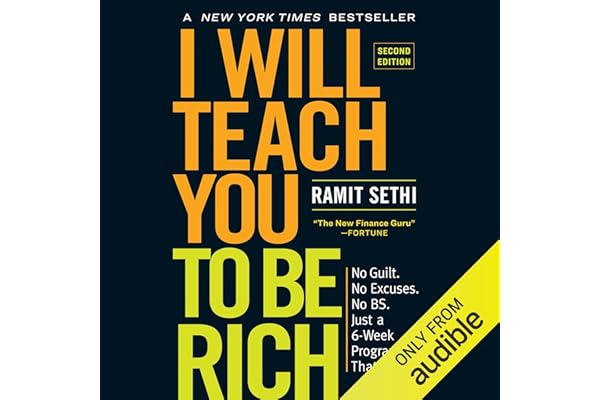
I Will Teach You to Be Rich: No Guilt. No Excuses. No B.S. Just a 6-Week Program That Works (Second Edition)

I Will Teach You to Be Rich: No Guilt. No Excuses. No B.S. Just a 6-Week Program That Works (Second Edition)


Price: $29.66
4.6/5

(22,733 reviews)

What Customers Say:

  • I bought it four times — a life-changing guide to money and financial freedom! ????
    I bought this book for myself, and then three more times — one in Spanish for my husband and two English copies as gifts for friends. That’s how much I loved it! Ramit Sethi explains personal finance in such a simple and relatable way that even if you’ve never understood money before, you’ll finally get it.He teaches step by step, with patience and clarity, as if he were guiding you like a baby taking your first steps toward financial freedom. The book is practical, motivating, and eye-opening. It completely changed the way I see saving, investing, and spending. I highly recommend it to anyone who wants to take control of their finances and build real wealth — without guilt or confusion.
  • So useful I send it to all my young adult family members
    This is one of those rare personal finance books I actually keep coming back to. Whenever I have a question about money, whether it’s optimizing my credit cards, thinking through investments, or just needing a reality check, I flip through it for a refresher. It’s practical in a way most finance books aren’t.What I appreciate most is how clear Ramit’s advice is. He doesn’t just tell you what to do, he explains why it matters and walks you through the reasoning. No confusing jargon, no vague platitudes, just actionable steps you can actually take.And here’s the thing: he’s not trying to sell you anything. No affiliate links for investment platforms, no pitch for his courses buried in the chapters. It’s just solid, honest advice from someone who wants you to get your money right.I’ve sent this book to all my younger family members. If someone I care about is just starting to think seriously about their finances, this is the book I want them to read first. It builds the foundation they need without overwhelming them.If you’re looking for a straightforward guide that you’ll reference for years, not just read once and forget, this is it.
  • My favorite book – nothing has compared so far!
    This is my favorite book that I return to over and over again. It is the one I gift the most frequently to friends, family, and recent grads. From my own experience, I disagree about this book not being for people under 20 (while simultaneously agreeing, so let me explain).I read most of the book when I was 18 as an undergrad and revisited a couple time till I graduated college and got my teaching credential at 25. I both read and scanned, sometimes without fully comprehending and without being able to implement, well, really any of the recommendations. And yet, the guidance was still super useful because I didn’t make financially unsavvy decisions that would delay my being able to set up a savvy, automated financial system upon graduation and earning an income.For example, I saw a lot of my peers making decisions such as buying a new car upon receiving their first paycheck or two because they could afford the payments (or even prior to graduation) – the payments that would put their fixed costs at 90% of their income and cause them to live paycheck-to-paycheck with a ton of stress!!This book gave me the vague and general understanding of what I was going to try to set up before I had the means to do so, before I was even earning a real income.It helped me determine and sort out my financial values and figure out how I wanted to live my life.It helped me choose a financially responsible spouse who also read the book. Ramit’s guidance helped us arrive at similar financial values and systems from the start. We’re so glad we have the tools to talk about money without stress. We’ve had many friends speak to us about how they have such a hard time talking about money with their partners because the partner just shuts down about it. We sympathize, and as a result of their transparency about their own struggles, we don’t take for granted how empowered we are because of this book. (And how brilliant of Ramit to supplement with his podcast of the same title to listen to couples have these conversations)The book is easy(ish) to follow. I would recommend just accepting that you won’t understand everything the first time through, but I realized later that I understood more than I thought and rereading sections really helped. I love the way it is organized into “weeks.”Each “week” has steps that are actionable and gave me *the* guide to set up my finances. What’s great is you can sort of “pause” at certain weeks when it takes longer to set up what you need to. For example, I graduated with about $4,000 in credit card debt. I read on so I know what was coming, but I had to pause after Weeks 1-3 as I prioritized paying off that CC debt (which I did within 4 months). I was able to create a debt payoff plan: I chose to use my student loan grace period to pay off the CC aggressively, then start paying off my student loan debt with minimum payments while building up the funds to open my Roth IRA at Vanguard, and so on.I automated everything and literally one day looked at my Roth and was like, “How did I get so much money?!” And that’s on a teacher’s and adjunct university lecturer’s low pay! I’m not kidding when I say it’s almost like it happened by accident – I set up everything immediately after college graduation and never felt like my life was limited or lacking from putting aside money each month. I was able to determine which order to pay things and how to allocate my paycheck. I’ve been able to keep my fixed costs low and build up a nest egg so I am under little financial stress, even through my periods of low pay and job insecurity.I just can’t say enough good things. Read it now even if you can’t implement. Read it even if it doesn’t make sense to you (yet!). It’s so worth it.
  • Grow your financial management knowledge.
    This is a great book for those who have not studied financial management. It introduces all of the basic as well as some advanced concepts on how to grow your wealth.

I Will Teach You to Be Rich: No Guilt. No Excuses. No B.S. Just a 6-Week Program That Works (Second Edition) is one of the best-selling products with 22733 reviews and a 4.6/5 star rating on Amazon.

Current Price: $29.66

#4

The Simple Path to Wealth: Your Road Map to Financial Independence and a Rich, Free Life

The Simple Path to Wealth: Your Road Map to Financial Independence and a Rich, Free Life


Price: $17.46
4.7/5

(15,444 reviews)

What Customers Say:

  • Hands down, the best Personal Finance book
    Review: The Simple Path to Wealth by JL CollinsJL Collins’ The Simple Path to Wealth is an invaluable guide for anyone looking to take control of their finances, build long-term wealth, and ultimately achieve financial independence. Written in a refreshingly straightforward and no-nonsense style, Collins distills complex financial concepts into practical, actionable advice that readers can easily grasp, regardless of their experience with investing or personal finance.The core message of the book is simple yet powerful: live below your means, invest in broad-based index funds (specifically, Vanguard’s Total Stock Market Index Fund), and let time and compounding do the heavy lifting. Collins is a strong advocate for what he terms “F-You Money,” a concept that focuses on building wealth not just for the sake of luxury, but for the financial freedom to live life on your own terms.One of the book’s greatest strengths is its clarity. Collins takes the intimidation out of investing by avoiding unnecessary jargon and presenting his advice in a conversational tone. For instance, he compares investing to owning “your own little business” in the stock market, where you focus on the big picture rather than getting caught up in day-to-day fluctuations. He advocates for simplicity—passive investing in low-cost index funds—and emphasizes the importance of keeping investment fees low to maximize long-term returns.In addition to his investment philosophy, Collins also addresses key financial principles such as avoiding debt, building an emergency fund, and understanding the power of financial independence. His advice is deeply rooted in personal experience, and he shares his own journey with readers in a way that feels relatable and inspiring.Though some seasoned investors might find the content familiar, the book’s appeal lies in its accessibility. Collins strips away the complexity often associated with investing, making it clear that wealth-building doesn’t require fancy strategies or insider knowledge—just consistency, patience, and discipline.However, one potential drawback is that the book’s investment strategy focuses heavily on the U.S. market, which may feel limiting to international readers. Collins acknowledges this but stays true to his message of simplicity, which some may see as a strength rather than a flaw.In conclusion, The Simple Path to Wealth is an excellent resource for both beginner and intermediate investors. It’s especially suited for those looking to develop a solid, long-term financial plan without getting bogged down by the technical details that often overwhelm novice investors. Collins’ simple, effective, and time-tested approach makes this book a must-read for anyone serious about achieving financial independence and living life on their terms.
  • Transformative book that will guide you along your financial path
    J.L. Collins provides clear, practical guidance on how to build wealth over time. The focus on low-cost index funds and long-term thinking is refreshing and easy to grasp, even if you’re new to investing, as I am. It’s straightforward and useful, and it’s funny at times, which keeps you moving right along. It doesn’t feel as if you’re reading something that’s good for you – but it’s definitely going to help you stay the course and grow your wealth.
  • The No-Stress Path to Financial Freedom
    Clear, calm, and refreshingly no-jargon. This book shows how low-cost index funds, avoiding debt, and staying the course can build freedom faster than you think. I finished feeling less anxious about money and more confident with a simple, doable plan.
  • Great Advice for Beginners!
    This book is great. It’s straight to the point and gives you the financial advice you need to be set for life without a bunch of extra fluff. Highly recommend. The only reason I didn’t give 5 stars is because it’s very Vanguard-centric. I’m not against Vanguard, but my job set up my 401k with Fidelity so I’ve been using them. But I might start using Vanguard too. Very useful book with simplified and fool-proof advice.
  • Superb financial education.
    I am in my mid 40s, and I am shocked by how uneducated I have been regarding finances despite working hard and saving well.The real reason I never wanted to handle this, was the amount of information I had to learn felt overwhelming. I ended up just having my husband handle all of our finances. But its not an effective way to support your spouse if you leave everything to them. He has been pushing for me to become more familiar with how finances and investments work.This book was a stunningly easy read with enough depth to help me understand the major concepts. It was very helpful to understand why Vanguard has been a path breaker. Agree…..the founder is indeed a hero.I recommend this book to all beginners….if you are 18 — this book is for you, if you are 21 — please get this book, and even if you are older, and you want to get started — get this book. It is simplicity itself and i now am kicking myself for not discovering the first edition that came out 10 years ago.What has changed for me? I will be looking into index funds, expense rations and moving my money to Vanguard when applicable, and also looking into HSAs which I never understood properly until now.This is a great book to plan for retirement no matter how old you are…if you even have 5 years or 10 years left to leverage before retirement — get this book and get going!!!
  • Simple and Easy Reading
    JL makes many great points and makes this books easy to read and understand. Highly recommend and worth trying as part of your portfolio.
  • Simple and Easy to Read
    Love this book so far. Breaks everything down in simple to understand steps. I am taking my time reading it so that I can implement these steps into my real life. Definitely worth the read and worth getting this for your young adults to read.

The Simple Path to Wealth: Your Road Map to Financial Independence and a Rich, Free Life is one of the best-selling products with 15444 reviews and a 4.7/5 star rating on Amazon.

Current Price: $17.46
#5

The Total Money Makeover Updated and Expanded: A Proven Plan for Financial Peace

The Total Money Makeover Updated and Expanded: A Proven Plan for Financial Peace


Price: $20.47
4.7/5

(22,134 reviews)

What Customers Say:

  • Great book!
    Great book, with great advice. I read it already, and bought this as a gift for someone else. Actually, this is the third time I have bought it as a gift for someone. This is simple, common sense information to get out of debt, and to stay out of debt, so you can enjoy your money. If you are struggling, or if you are just trying to save some money, this is a good book to read. It’s also a good book for a young couple just starting out, or for someone just graduating high school. This book is good for anyone. Wholesome with a plan to help you! Who wants to be in debt?!! No one! I highly recommend the book!
  • Helpful for financial peace of mind
    Gave it as a gift to a young person who inherited a house. Hopefully he can keep up the payments on his salary.
  • Must read
    The book is great quality. I was recommended it by a friend and have just started reading it. There are so many great points in this book that many people should read.
  • Tried and true principles
    I used to be careless with my money, running negative balances in my bank account as a young adult. Budgeting is a huge step.
  • Great Product arrived as agreed
    Worked great! Would order again
  • Good read
    Good read
  • Good book
    Good book very informative.
  • A must read for those looking to reduce debt!
    Dave Ramsey helps bring debt into reality and makes the reader understand why it is a terrible thing to have. His plans can seem outlandish for those that arent committed. If you think this is true I highly suggest at least using his budgeting mechanisms you can see where your money is going. You’ll be surprised with how your spending money and why your behaviors need to change.

The Total Money Makeover Updated and Expanded: A Proven Plan for Financial Peace is one of the best-selling products with 22134 reviews and a 4.7/5 star rating on Amazon.

Current Price: $20.47

#6

Zero to One: Notes on Startups, or How to Build the Future

Zero to One: Notes on Startups, or How to Build the Future


Price: $11.81
4.5/5

(39,036 reviews)

What Customers Say:

  • Thiel has more wise things to teach you than just crazy though brilliant visions.
    I have been reading Thiel‘s Zero to One in the last days. And after a compilation of his class notes last year, here are a few more comments. His book is as good as his notes but some readers may be puzzled. It’s not a book about how to build start-ups. (For this read Horowitz or Blank) “This book offers no formula for success. The paradox of teaching entrepreneurship is that such a formula necessarily cannot exist; because every innovation is new and unique, no authority can prescribe in concrete terms how to be innovative. Indeed, the single most powerful pattern I have noticed is that successful people find value in unexpected places, and they do this by thinking about business from first principles instead of formulas.” [Page 2]Thiel is a strong believer in exceptional achievements, in innovation just like in art or science. “The entrepreneurs who stuck with Silicon Valley learned four big lessons from the dot-com crash that still guide business thinking today:1. Make incremental advances2. Stay lean and flexible3. Improve on the competition4. Focus on products, not sales.These lessons have become dogma in the startup world. (…) And yet the opposite principles are probably more correct:1. It is better to risk boldness than trivaility2. A bad plan is better than no plan3. Competitive markets destroy profits4. Sales matters just as much as product.“[Pages 20-21]There is one point where I disagree with Thiel. Though I tend to be convinced by his argument that monopoly is good and competition is bad – read Thiel with care for the subtlety of his arguments – I do not think he is right when he writes [page 33]: “Monopolies drive progress because the promise of years or even decades of monopoly profits provides a powerful incentive to innovate”. I prefer Levine and Boldrin. Now I do believe that established players are displaced by new players – not competitors – who innovate when the champions who have become dinosaurs stop being creative.Thiel does not believe in luck. “You are not a lottery ticket” and I agree that you can minimize uncertainty by carefully planning and probably by adapting too. He still quotes [page 59] Buffett who considers himself “a member of the lucky sperm club and a winner of the ovarian lottery”. He also quotes Bezos with his “incredible planetary alignment” (which has not much to do with luck either). According to Thiel. success is never accidental.I also like his piece about founders: “Bad decisions made early on – if you choose the wrong partners or hire the wrong people, for example – are very hard to correct after they are made. It may take a crisis on the order of bankruptcy before anybody will even try to correct them. As a founder your first job is to get the first things right, because you cannot build a great company on a flawed foundation. When you start something, the first and most crucial decision you make is whom to start it with. Choosing a co-founder is like getting married, and founder conflict is just as ugly as divorce. Optimism abounds at the start of every relationship. It’s unromantic to think soberly about what could go wrong, so people don’t. But if the founders develop irreconcilable differences, the company becomes the victim.” [page 108]Ands now about sales: “In engineering a solution either works or fails. [Sales is different]. This strikes engineers as trivial if not fundamentally dishonest. They know they own jobs are hard so when they look at salespeople laughing on the phone with a customer or going to two-hour lunches, they suspect that no real work is being done. If anything, people overestimate the relative difficulty of science and engineering, because the challenges of those fields are obvious. What nerds miss is that it takes hard work to makes sales look easy. Sales is hidden. All salesmen are actors: their priority is persuasion, not sincerity. That’s why the word “salesman” can be a slur and the used car dealer is our archetype of shadiness. But we react negatively to awkward, obvious salesmen – that is, the bad ones. There’s a wide range of sales ability: there are many gradations between novices, experts and masters. […] Like acting, sales works best when hidden. This explains why almost everyone whose job involves distribution – whether they’re in sales, marketing, or advertising – has a job title that has nothing to do with those things: account executive, bus. dev, but also investment banker, politician. There’s a reason for these re-descriptions: none of us wants to be reminded when we’re being sold. […] The engineer’s grail is a product great enough that “it sells itself”. But anyone who would actually say this about a real product must be lying: either he’s delusional (lying to himself) or he’s selling something (and thereby contradicting himself). […] It’s better to think of distribution as something essential to the design of your product. If you’ve invented something new but you haven’t invented an effective way to sell it, you have a bad business – no matter how good the product.” [Pages 128-130] And if you do not like it said this way, watch HBO’s Silicon Valley episode 15… I may come with more comments when I am finished with this great book.In fact I have… and here are a few more comments, less about entrepreneurship than about social issues. Whatever the reputation of Thiel in Silicon Valley as a possible Libertarian, there were a couple of topics he addresses very convincingly. He is not a pure Contrarian. He disagrees with mainstream fashion in a very serious manner. Here are a couple of examples:– The machine will not replace humankindYes computers have made impressive progress in the recent decades, but not to the point of replacing mankind. He shows very convincingly through the cases of Paypal and Palantir [pages 144-148] that computers cannot solve automatically tough issues but are only (excellent and critical) complements to human beings. Even the Google experiment of recognizing cats “seems impressive – until you remember that an average four-year-old can do it flawlessly” [page 143]. He finishes his chapter about Man and Machine this way: “But even if strong AI is a real possibility rather than an imponderable mystery, it won’t happen anytime soon: replacement by computers is a worry for the 22nd century. Indefinite fears about the far future shouldn’t stop us from making definite plans today. Luddites claim that we shouldn’t build the computers that might replace people someday; crazed futurists argue that we should. These two positions are mutually exclusive but they are not exhaustive: there is room in between for sane people to build a vastly better world in the decades ahead. As we find new ways to use computers, they won’t just get better at the kinds of things people already do: they’ll help us to do what was previously unimaginable” [pages 150-151]. You will not be surprised I prefer this to Kurweil views.– Greentech was a bubble and it was obvious from day 1.I was always puzzled with greentech/cleantech. Why are people so excited about the promise to solve an important problem when we do not have any solution. Thiel is far tougher. First he shows the obvious: it was a bubble. Then he analyzes this industry through his “zero to one” arguments.“Most cleantech companies crashed because they neglected one or more of the seven questions that every business must answer:– Engineering: can you create a breakthrough technology instead of incremental improvements?– Timing: is now the right time to start your particular business?– Monopoly: are you starting with a big share of a small market?– People: do you have the right team?– Distribution: do you have a way to not just create but deliver your product?– Durability: will your market position be defensible 10 and 20 years into the future?– Secret: have you identified a unique opportunity that others don’t see?If you do not have answers to these questions, you’ll run into lots of “bad luck” and your business will fail. If you nail all seven, you’ll master fortune and succeed. Even getting five or six correct might work. But the striking thing about the cleantech bubble was that people were starting companies with zero good answers – and that meant hoping for a miracle” [page 154]. What’s next? Fintech?
  • Thanks for the food for thought, but the parts about monopolies seem fit only for a pre-utopian revised social contract.
    Peter Thiel navigates many interesting discussions. However, his examples of monopolies are of his own special definition of ‘monopoly’–the nearest example being Microsoft towards the end of the Clinton administration, and that only “…monopolistic…” because it wasn’t entire and was of a temporary nature. Competition begats redundancy and while that begats negative externalities it also begats a more diverse set of job opportunities for the top tier and also-rans. A society where there were only true monopolies would mean that the proletariat would probably have to starve to death, work for wages insufficient to serve as a positive extrinsic motivator (mostly just enough to narrowly escape the fear of death or a more general suffering), or else we would have to move further and further away from a market based economy to a planned one for the sake of avoiding fates as unemployable marauders, murderers, cannibals, and those who were wealthy enough or minimally viable economic units to murder through indifference and agreement to see the surplus humanity as criminals deserving of their horrible fates.Enjoyed the book, but I think that the hunt for monopoly is delusional. However, that doesn’t mean it isn’t a good starting point for evaluating the potential of a business. However, competition is inevitable in the short-run unless one has the capital to support research and development on materials and machines with internationally-recognized patent potential. In the long run, it is inevitable anyway because the head-start that having a patent gives you for perhaps 20 years (less if you spend any of it as an NPE) expires and if you wasted capital on failed marketing attempts and failed to up the ante with another well-timed patented improvement on the technology then a competitor who has observed your mistakes will surely come along and leverage your technology and their own patented improvement on it to steal the market you’ve made.I think that monopolies COULD be desirable within the context of a pre-utopian society that held it as its existential purpose to solve scarcity and put every sentient being to work on a variety of activities that best leveraged their abilities at achieving our collective utopia. Why waste resources when there are other hard problems to solve? However, that’s not the world we live in. We live in a world where any sanction against competition means that the carrying capacities of our societies increase suffering and general idleness for the poor. In one of his last books, John Kenneth Galbraith wrote about the importance of jobs for their own sake in some present-to-future state of an economy. Peter Thiel is a libertarian so he presumably doesn’t like shiftless bums, but widespread embrace of monopolistic behavior would lead to exactly that and demand that government become even more lionized as moral compass to either employ or subsidize the poor. Everyone is better off when everyone works and monopolies have no social contract with the public to hire people they do not need, while competing firms intrinsically involve occupational redundancy and increase human carrying capacity within a society.If Peter Thiel would like to use his wealth to save the fate of mankind, I have a plan for an alternate form of government called anarcho-technocracy, which seeks to combine direct democracy, rule by consensus of the demonstrably informed, universal employment, and autodidactic lifelong education to support upward mobility in both hobbies and jobbies. As he is a self-avowed Christian, I would like to pitch him on the theological inspiration for the form of government, which previously existed for a period for roughly 260 years in Israel prior to the coronation of Saul .What it comes down to is these points:1) If you’re worth following, then rational people will follow (whether you want them to or not).2) The will of uninformed or irrational people should not be allowed to supersede the authority of those who cared enough to inform themselves about the policy in question. The barrier to suffrage is one’s own commitment to accessing and comprehending freely available and actively promulgated information. If you can’t meet that barrier, then it is unjust and immoral that ignorance (regardless of headcount) should win because, with little exception, the number of people who are informed about a narrowly defined public policy or industry topic at a level greater than or equal to a C- is much smaller than the number of people who know less or are indifferent.3) The cult of personality is always a bad thing and policy grab bags make rational administration of the public good and encouragement of public-private partnerships inconsistent and unreliable. We have achieved an information technology infrastructure sufficient that cults of personality and policy grab bags are neither the fairest, most rational, most expedient, or most informed ways of solving problems any longer.4) Few rules need to be set in stone beyond redaction and their subversioned or subversive amendments are only ever sub-cultural and so are best left to the local-most level of government (strong federal, strong regions, and strong counties) with rulings on an arbitration between concerned parties (individuals and organizations) fast-tracking directly to the widest scope of government where the preponderance of consequences might be externalized and with votes on any referendum and ruling being weighted towards those with skin in the game yet including anyone who sought to know the facts to at least a C- level.Why do I think that this would work better? Everybody is obligated to work for better instead of being excluded from the process arbitrarily–if you don’t like a policy–inform yourself, propose a better idea, persuade others. If the experts and those with capital involved agree, it can happen more quickly without having to convince or bribe those who neither have capital involved nor have bothered to understand the facts let alone their provenance.

Zero to One: Notes on Startups, or How to Build the Future is one of the best-selling products with 39036 reviews and a 4.5/5 star rating on Amazon.

Current Price: $11.81

#7

Die With Zero: Getting All You Can from Your Money and Your Life

Die With Zero: Getting All You Can from Your Money and Your Life


Price: $17.32
4.4/5

(7,497 reviews)

What Customers Say:

  • A fantastic read
    I wish I had known about this 30 years ago. Having been retired now for 5+ years, it’s still hard to get out of the “autopilot “ mode of saving for the future. The author gives great advice on changing that mindset and living your best life through experiences.
  • Spend to Live
    This book covers a subject many don’t want to address. We all only have one life and it’s important we live it to the fullest. He makes some financial recommendations along with life adventures. You will probably be uncomfortable yet this is worth the read.
  • Excellent advice for wise money management
    This book was so helpful and helping me to make decisions about how I spend my money. It was particularly timely as I am nearing retirement and am understandably anxious about drawing out of my retirement funds. At the same time, I know that people in my age group ( I am in my 60s ) should travel and do those types of activities since the older you get the less likely you are to be able to do so. The author provides a good philosophy of the point of acquiring money, and also how to spend it based on your values and living a fulfilling life.
  • You need to read this book!
    This was truly a mind changing book for me. It completely changed our post-retirement asset allocation plan (aka how we ate passing our $ on to our kids and relatives). But it also refocused how we spend our money on experiences. Wish I had read it 30 years ago!
  • Dangerous retirement advice, but makes you think about your future!
    Die With Zero contains a controversial and thought-provoking concept, which is to plan your life so that you purposely spend all of your wealth by the time you die. To maximize a person’s life, the author (Bill Perkins – NOT a financial advisor) recommends that most people should begin spending down on their retirement savings between 45 and 60 years of age (depending on one’s estimated life expectancy) so that they will reach zero net worth by the time they pass away. In theory, this plan is a great idea. In reality, this idea is impractical and down-right dangerous given that it’s impossible to predict the timing of one’s demise.I strongly disagree with many of the points in this book, starting with the notion that any money earned during a person’s career is “wasted” to the extent that the person dies before spending it. In other words, the author is saying that money has no value unless it is spent during one’s lifetime. In my opinion, this is wrong for several reasons. As just one example, having savings in the bank gives many folks the feeling of financial peace and security. If you don’t believe such a feeling is valuable, just ask anyone who has ever lost sleep worrying over unpaid bills or a lack of retirement savings.With that said, I found other points in the book that are worthwhile, including:1) everyone should be mindful of how they spend their time and money (i.e., consider whether the daily Starbucks routine is a better choice than saving for front row concert tickets or a summer vacation and regardless how you answer that question, it’s empowering to know you have a choice),2) a fulfilling life has more to do with amassing memorable experiences than increasing the size of one’s bank account,3) plan to spend some money on experiences while you can still physically participate (don’t wait til retirement to buy a ski boat b/c most 70 year olds can’t water ski),4) retirement planning should include the concept that spending varies during your golden years (most retirees are more active/spend more $$$ in early retirement and less as their health declines), and5) deferred gratification (i.e., saving for an emergency or retirement) is wise, but denied gratification is not smart (i.e., work until you die without stopping to smell the flowers along the way).Overall, I completely disagree agree with the main message in this book. Personally, I’d rather die with a pile of unspent money than take a chance of outliving my savings and end up eating dog food for my remaining days on earth. For financial planning advice, I definitely don’t recommend this book. However, it is valuable in the sense that it provides a different perspective on retirement savings and made me think more about my future.
  • This book caused me to have a paradigm shift about money
    This book changed my whole perspective on financial planning. I thought it was such an important read that I gave it to all 3 of my adult children. I want them to learn these lessons in their 20’s rather than their parents learning them in their 50’s.
  • A quick read with a good message about how to live your life to the fullest.
    This is not a retirement book per se. Rather, it is a simple reminder to life your life to the fullest, take chances while you are younger and more easily able to do so and to spend your money on experiences that bring you and your loved ones joy.
  • Excellent Read
    Excellent read for people of all ages. I highly recommend this book for younger people. I’m middle aged and this has opened my eyes and analyze the way I’ve been living my life. I enjoyed reading this book.

Die With Zero: Getting All You Can from Your Money and Your Life is one of the best-selling products with 7497 reviews and a 4.4/5 star rating on Amazon.

Current Price: $17.32

#8

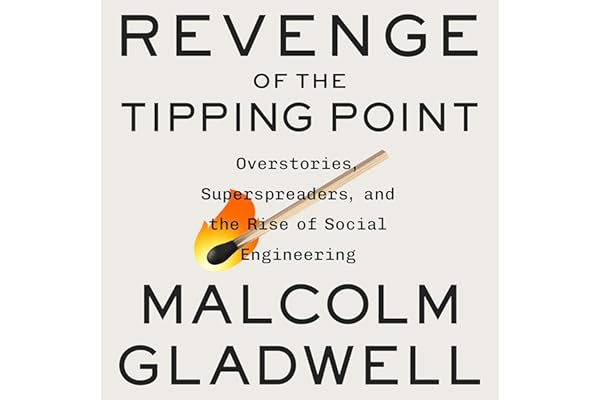
Revenge of the Tipping Point: Overstories, Superspreaders, and the Rise of Social Engineering

Revenge of the Tipping Point: Overstories, Superspreaders, and the Rise of Social Engineering


Price: $19.68
4.4/5

(5,139 reviews)

What Customers Say:

  • Gladwell Revisits Tipping Points, and looks at the dark side
    Malcolm Gladwell returns by revisiting the topic of his first book: The Tipping Point. As he states right at the beginning (pg 7) “I want to look at the underside of the possibilites I explored so long ago. If the world can be moved by just the slightest push, then the person who knows where and when to push has real power.”Gladwell writes the book in a style that will be familiar with anyone who has read his previous books. He is a gifted storyteller and each facet of the argument he is trying to make is introduced with a story.(Spoilers from here on out)Summary: Gladwell tries to find the mechanisms that explain the opioid epidemic in the US (prescription and illicit drugs). Gladwell shows how Purdue Pharma, along with guidance from the consulting firm McKinsey, leveraged certain concepts about the nature of epidemics to create the current crisis.Through the process he explores concepts including, “small town variation,” “overstories” – which he explains is his word for something resembling a Zeitgeist, revisits “tipping points” and monocultures among other topics.Central to his perspective is the way that stories shape our perspective, and how those who tell stories can shape the public consciousness. He gives a number of examples that capture this vividly.Along the way he grapples with some knotty moral questions. He explores engaging with minor discrimination to prevent vicious discrimination. He raises the issue of better methods of identification of potentially leading to profiling disadvantaged groups (in his primary example, the COVID virus was more likely to spread from people who were elderly and overweight.) He has an interesting perspective on Ivy League schools like Harvard using sports teams to maintain the student balance that they desire.Why should you read this book?- Gladwell is a writer who is not scared to ask big questions or explore knotty issues. His discussions about discrimination and about the way that the introduction of Purdue’s OxyContin gummies actually exacerbated the situation raises some challenging questions.- Gladwell’s writing style is engaging and fun to read. I read the book over a 24-hour period and am sure many others will do the same- Gladwell brings up anecdotes and stories that are not well known and will likely cause you to reconsider how you see things that you thought you knew.Some other notes:- Gladwell has stated at public lectures that looking back, there are aspects of his earlier writing that he no longer agrees with. Gladwell is someone who is clearly constantly exploring and learning and is not afraid to change his perspective on topics. I view his writing as deeply thought provoking but do not assume they are hard facts. (In this book, I have a hard time seeing how Madden’s triplicate forms would be considered an ‘overstory’ rather than a technical reality that impacted the drug epidemic.- Many of Gladwell’s previous books have introduced ideas that were widely adopted (tipping point is just one of them), so I would expect ideas from this book to circulate pretty widely.- This book does not discuss how social media impacts public opinion. It never mentions ‘fake news,’ contemporary politics, or other aspects of modern society (in 2024) that I had expected from the title.Is it for children: The book talks about Medicare fraud, drug abuse, suicide, White Flight and the Holocaust, so there are quite a few heavy topics. I do not recall any profanity or sexual content.Conclusion: Gladwell has put out another fascinating book that spans a wide range of topics and is sure to leave you thinking. It is a quick, engaging read, even as some of the topics are quite heavy.As with Gladwell’s other books, it is sometimes hard to tell if everything seems to be tying together neatly because in fact they do, or if it is Gladwell’s skill as a writer that makes it seem so. Reviewing the notes I wrote on the book, there were aspects that I was not sure fit perfectly, though that may be an indication of the limits of my understanding of the book, rather than a flaw in the content.Overall, it is a fun read that is thought provoking. And as noted, because Gladwell is so widely read, it seems likely that elements of this book will become widely known and shared. Interestingly, he touches on some ideas from The Tipping Point but almost never references them directly or even acknowledges which ideas he discussed in his earlier book.
  • Good book
    Good book. It’s a good light read, nice analysis of the opioid pandemic among other things. Like tipping point.
  • Truth is in the details.
    The title of this book could have been: “The Etiology of Change.” Etiology is a medical term meaning cause. And I use it here because Gladwell, as he did in the first Tipping Point, frames change in terms of an epidemic.The tipping point, of course, is the mass at which a duality moves inevitably, and often quickly, in the other direction. It’s important because all of existence is defined by dualities. Up is always accompanied by down. Left doesn’t exist without right. And so it is with the many social trends, such as housing, college acceptance, and the opioid crisis in which there are identifiable groups of individuals which share a distinguishing common trait (e.g. race, religion, addiction) within the larger group.The objective I believe the author is seeking is how to restore balance when imbalance shows its ugly mug. The search for balance is ubiquitous to nature because of the universal existence of dualities.The topics that Gladwell addresses (e.g., Why does Harvard have a women’s rugby team?) are as obscure as those he shared in the first book. And that alone makes the book informative and entertaining. He definitely has a nose for the obscurely interesting.And, as in all his books, the research is thorough and impeccable. He does, however, spend a lot of time quoting third parties in order to build his case. Perhaps more than necessary. I personally wish he spent more time expanding his conclusions. He has a strong enough reputation that he can assume our acceptance of his source observations.His conclusion, as I read it, is that we can understand far-reaching but perplexing social trends by looking into the details. The truth, or at least the greater truth, always hides there. And if we can uncover it, we can address the problem.Resolving the problem may not always be seen as “fair,” however. The solution, as he notes, is often counter-intuitive to society’s pre-defined solutions to the problem. And that’s where the book sometimes just stops. There are few real prescriptions for how to overcome that hurdle. I suspect Gladwell considered that to be beyond the scope of the book, but it did leave me wondering, “Okay, but what do I do with that?”To me, this is a book about context. We do tend to oversimplify everything in our everyday public discourse. And certainly in this election year the oversimplification is at a fevered pitch. We’re just yelling myths at each other. The world is far more complicated and nuanced than either political party is currently acknowledging.In that regard, this book is timely although Gladwell does not enter the political fray at any level. The book is more investigative journalism than opinion piece.Gladwell is lucid and profoundly curious. The book is an easy read, and you should be able to finish the book in just a couple of days. It is worth the time.
  • Riveting read and important to know
    Of all of the Gladwell books—and we have enjoyed them—this may be the most page turning. It also may be the most important one to understanding the complications and critical tipping points of MODERN life, informing us of the critical factors in thinking about how to go forward with them.It is a valuable primer on social engineering that not many of us have been thinking about, but that should be more important to us in understanding TODAY’S sociology. It should be assigned reading in any sociology course at any level. It would also be the most popular assignment.
  • Repetitive
    This is modestly interesting not very repetitive. The while book and it’s concepts could be covered in 1/5 of the pages and 1/5 of my time.
  • Worth a read
    Thought provoking book. Interesting follow up to the original Tipping Point. Well reasoned and researched stories that are tied together in typical Gladwell fashion.
  • Well worth the read
    I ordered this as a gift and once they finished it I had a chance to read it. If you have read the original Tipping Point this is a “change of heart” and interesting to read – different point of view this time.
  • Masterpiece by Gladwell
    The insight shared here can be used in many aspects of our lives, certainly a must read. Gladwell gives us the tools to stop epidemics.

Revenge of the Tipping Point: Overstories, Superspreaders, and the Rise of Social Engineering is one of the best-selling products with 5139 reviews and a 4.4/5 star rating on Amazon.

Current Price: $19.68

#9

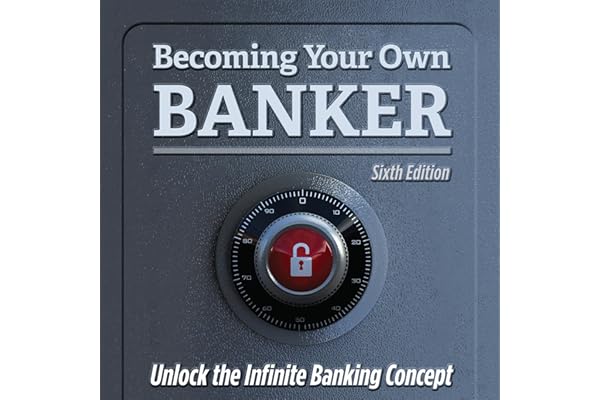
Becoming Your Own Banker: Unlock the Infinite Banking Concept

Becoming Your Own Banker: Unlock the Infinite Banking Concept


Price: $13.08
4.6/5

(2,348 reviews)

What Customers Say:

  • Using Life Insurance as a Banking Tool
    Many people dismiss this book and it’s concept because the author tells you that you have to purchase a particular type of Life Insurance policy and they don’t understand what this has to do with Banking. Those people who are the ones putting 1 or 2 star reviews, DON’T understand that the Life Insurance Policy is the Bank. Not in the brick and mortar function, but in the services function. You can borrow against your own life insurance policy when you need to fund a purchase, and then you pay YOURSELF back (with interest – you decide), and this money goes back into the policy, maintaining your wealth. Versus, having to go to a bank to borrow and pay them back with interest. Instead of them getting the money, you get the money. This is the ENTIRE concept of the banking aspect of this insurance policy and why it’s beneficial. In addition, once you pass, the policy pays out to your heirs. A smart way to do this, is to then take 30% of this payout and have a policy set for those heirs, so when they pass, their heirs also get the same benefit, and repeat for every generation. THIS IS HOW YOU MAINTAIN GENERATIONAL WEALTH. Imagining paying $1M into your life insurance policy over the course of say 20 or 30 years ($500/mo), and your policy is for $10M. When you die, you put in $1M, and your heirs will receive $10M. This is why EVERY SINGLE Wealthy person gets life insurance on all their family members. So whoever dies, the family estate receives $10M+ EVERY SINGLE TIME. And on top of this, you can borrow against your policy at any time, because it is a $10M policy and THAT is the collateral. So if you want to buy a $500,000 house for investment purposes, you don’t need to go to the bank anymore. You simply borrow against your policy, and the repayments are made to your policy. There are also ways to tie this into a Trust or Family Foundation, to minimize and even reduce your tax obligation.Does this makes sense now?Please understand that this form of wealth maintenance also has it’s own cost. A regular person working a 9-5 job @ some retail store, earning the minimum wage, won’t be able to contribute to such a policy. However, once you have created some type of wealth for yourself (by maximizing your income & not buying silly stuff), then you can apply these principals to maintain and grow your wealth. Heck, you can take out multiple policies.Remember, the old saying…. “It takes money to make money.” This is what this concept is about. You can’t do this without having some funds. You can start out with about $10k, but you have to make sure you can sustain the monthly payments for the rest of your life (think $250/minimum to make this worthwhile). Once you stop, you don’t get that money back. I suggest you speak to your insurance agent about this, and options for “Return Of Premium” in your policy. Again, this is about Financial Education, and not some short cut to wealth. THERE IS NO SHORTCUT.The ONLY SHORTCUT is Education. So, Educate yourself and your children about wealth creation and management.Also, it’s easier to make $10,000 than it is to save $10,000. Go out there and start hustling as hard as you can to get this going!
  • Banker book
    Great bankers book.
  • High quality
    My book came on time in great condition.
  • Infinite banking
    I love this book good information to know
  • Becoming your own banker
    When I first picked up “Becoming Your Own Banker”, I didn’t expect to learn this much about how money works in real life. It was a little bit confusing at first because it talks a lot about life insurance and banking, but once I got into it, I realized the author was trying to teach a really important and different way to think about money.The book is about the “Infinite Banking Concept.” Instead of you borrowing money from a bank, you can use your own life insurance policy to borrow from yourself. That way, you can control your money, pay yourself back with interest, and build wealth over time. It’s kind of like becoming your own private little bank. The book used stories and examples to explain concepts in an easy-to-understand way.
  • If you know what’s going on then you will know what to do….Great financial tool!
    There is one pool of money, and if you stay in control of as much of the money that flows through your hands, then you can control how it is used and who benefits from its use. You work hard so you and your family can enjoy what money provides. Over a lifetime, you control how your money is used. If you keep doing the same things repeatedly, expecting different results, you might never get anywhere fast. However, if you decide to break out and make a difference in your life and that of your family and those around you, you can take back control of your finances, which impact so much of our lives.This book has the ingredients; all you need to do is follow the directions. As an insurance agent, I have listened to this book about 6 times, and because this book was written for non-financial advisors, you will be able to use his examples and better understand how to put the systems to work for you.Do yourself a favor and find an accountability partner or someone like-minded who has read, understood, and can step through a plan with you to start implementing these principles. If you need help, find me, and I would be happy to set up a group/meet-up to discuss how to incorporate this into your life and start TAKING back control of your finances. Jeremiah Chevrolet Stephen
  • Needed by all….
    The book sale was quick and fast arriving ahead of time and in very good condition.The content of the book is awesome

Becoming Your Own Banker: Unlock the Infinite Banking Concept is one of the best-selling products with 2348 reviews and a 4.6/5 star rating on Amazon.

Current Price: $13.08

Updated: Nov 28, 2025
Data from Amazon.com
9 products