Top 8 Best-Selling Science & Math for November 2025

$12.99

Category:

Danh sách Top 10 Science & Math bán chạy nhất tháng November 2025 được tổng hợp dựa trên dữ liệu thực tế từ Amazon.com. Các sản phẩm được đánh giá cao bởi hàng nghìn người dùng, với điểm rating trung bình từ 4.4 đến 4.8 sao. Hãy tham khảo danh sách dưới đây để chọn sản phẩm phù hợp với nhu cầu của bạn.

#1

A Navy SEAL’s Bug-In Guide: How to Turn Your House into the Safest Place on Earth

A Navy SEAL


Price: $37.00
4.7/5

(3,206 reviews)

What Customers Say:

  • EASY TO READ PACKED FULL OF INFORMATION
    We are not big time peppers but found this book packed with information that I use on a daily basis. Easy to read, clear instructions and tips on saving money on meals including recipes, what emergency items to have on-hand, plus how to take care of yourself while going through a catastrophe. Lots of good information and interesting to read.
  • Must have to be prepared! Buy the original!
    This is a well laid out book to be prepared. So much information that’s easy to understand for anyone. This is the original version of this book. There are versions of this manual that are a smaller versions and hard to read, with some made substandard that the pages fall out.It’s well worth the money, for several reasons.A complete manual to prepare yourself, your home, and those you care about!
  • Best written guide!
    The book is very well written! The information is a very “Good To Know”. If nothing else … it will give you a list of what foods to always keep on hand. We failed miserably. I doubt anything is coming our direction and if wrong, I would guess it is someone that is known by millions plus already has had plans for years. I am a believer of most faiths coming together to show how life can be one of many faith’s and customs. not a silent war on the population which would be a losing battle with the masses. Just random thoughts, but I am not schooled in these matters and my goal is peace unity, and vote for those their chosen candidates. I hope they will follow the people’s wishes that elected them!Advice: great book for political meetings and luncheons or just discussions about how to prepare people for anything.
  • Life saver!
    Hopefully I’ll never need to use it, but this is the MOST informative book, and it’d literally be a life saver!
  • Complete and very detailed
    Advertised as a complete guide to bug in and preparation for an emergency.The book is very detailed and yet very easy to read and follow.Great pictures and lists as well as recipes for li tied food availability.
  • Lots of Good Info In One Spot
    Heavy emphasis on food acquisition, storage, and long term menu planning. Lots of subjects are covered, and key to getting the most out of this book is reading it and acting on it – in advance. The writing is easy to follow, and almost every page has clear color photographs.
  • EXCELLENT Book
    You will not be sorry for purchasing this book. EXCELLENT book packed with helpful, necessary, information. Make sure you buy the book with Joel Lambert as the author. (There are some (less adequate authors) trying to copy cat his book and make it their own).
  • Its abug in book
    Just started reading it. So far very easy to read, and very informative. Worth the read and the cost. Enjoy.

A Navy SEAL’s Bug-In Guide: How to Turn Your House into the Safest Place on Earth is one of the best-selling products with 3206 reviews and a 4.7/5 star rating on Amazon.

Current Price: $37

#2

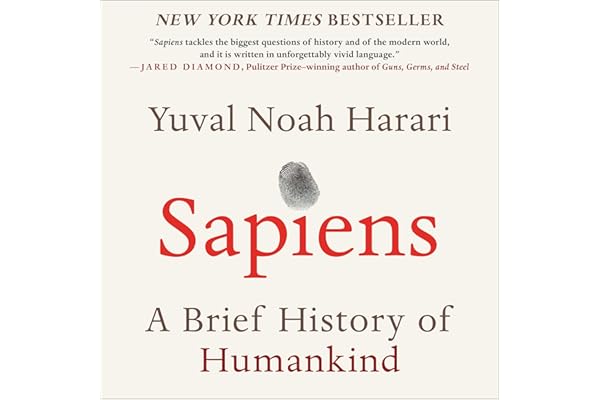
Sapiens: A Brief History of Humankind

Sapiens: A Brief History of Humankind


Price: $23.62
4.6/5

(144,927 reviews)

What Customers Say:

  • Excellent overview of how modern society got to this point and ways to think about the future
    Sapiens is a brief overview to the major stages of human history. It is definitely a unique account in that it focuses on a few major events in human history that catalyzed changes to how people organized. The writing style is engaging and the author always tries to focus on issues from all perspectives and as a consequence many people reading might feel shaken at times or perhaps even insulted. The result is a success though and the author forces the reader to rethink the way they look at human culture and ideological preferences. The author also forces the reader to think about in what light should we be thinking about human progress and the course of history as it is a deep issue that is often glazed over with a final focus on what our conception of progress is for the future given we have put ourselves on the borders of being able to engage in intelligent design of ourselves.Sapiens is split into 4 parts. The first starts with the species which includes those now extinct within the homo genus. The reader learns about the spread of various branches of the family tree and the timing of their diffusion. It gives a sense of the initial diversity proto humans had several hundred thousand ago. We learn that there was nothing inevitable about the human form and how in certain environments larger species evolved and in others dwarfs had a competitive advantage. The author from the beginning convincingly describes how our history is very hard to see as destiny when looking back at the initial conditions we faced. The author describes how around 70k years ago there seemed to be a change in our mental structure that led to an advantage over other proto-human species and we soon eradicated other homo genus competitors. The actual events that catalyzed this is impossible to know and the author describes to the reader the impossibility of looking into the past as the data is non-existent and the best we can do is imagine and such an exercise is largely fruitless. The author also details how the spread of humans led to the death of local ecosystems and notes how humans in Australia and elsewhere led to the extinction of a great number indigenous species.The author then focuses on how hunter gatherers migrated to farming with the Agricultural Revolution which began around 10,000 years ago. The author discusses how individuals had a more difficult lifestyle in agriculture but human density increased. The agricultural revolution can be seen as an oddity through this lens as the happiness of people was diminished though the ability to procreate was amplified. The lifestyle of hunter gatherers was less cyclical than farming as one could move with the seasons and change diet accordingly. Farming forced people in closer proximity with animals which led to higher disease and in addition cyclical crop yields. The author also discussed how farming led to larger communities and as the bonds of association weakened the growth of the state began. The author notes that people can live in communities of 100-150 people before intimate trust breaks down. Early rulers of civilizations all exploited the fact that people were tied to the land in farming communities and things like the pyramids were built due to the ability to organize large labor pools which was only possible when farming could be depended upon. The author discusses how different Hammurabi’s code with the declaration of independence. The system of law of the agricultural revolution is profoundly different than today and the author forces the reader to think about whether there is such a thing as right and wrong or is there just context and human construct.The author then starts to focus on perhaps one of the most important human constructs in history – money and religion. The author describes how money allowed people to coordinate to a degree that was impossible in its absence. Barter economies are impractical at very low levels of trade but money solves these problems amazingly well. The author gives some basic economics lessons and describes how money solves issues of trade and created a medium for people to trust one another. The author also discusses religion and how that also allowed people to have something in common with one another on a grand scale. The author discusses how religion shouldn’t be viewed through the lens of God alone as religions like Buddhism are not centered on God. The author focuses on what religion does for people and how it creates social relations. The author also discusses the evolution of polytheism to monotheism and dispels with why polytheism seems silly in todays world by describing the conditions in which it arose and was applied.The author then moves into the modern era and discusses the scientific revolution and the growth of capitalism. The author discusses our discovery of our place in the solar system and the transition to the scientific method. The author then re-focuses on money and the transition from money as a medium of exchange to money as a store of wealth and the growth of the banking system as a means of allocating savings to investment. The author very intuitively introduces the concept of the money multiplier and how belief in growth in the future greased the wheels for investment today. The author over simplifies a little and infers that lending in the past was not due to the fact that people were unaware of lending but rather there was no economic growth so loans were seen as much riskier as the world was zero sum. Nonetheless as the merchant class grew and embraced the framework of double entry bookkeeping the power of capitalism to fuel growth emerged with force and propelled smaller merchant nations to take on global roles. These included the likes of Holland and England at the expense of countries like Spain. The author gives good examples of how enforcement of contract and rule of law led commerce driven growth. Interwoven throughout the history are questions of whether growth in and of itself should be a goal and discusses the philosophy of capitalism and libertarian ideology but contrasts it with other conceptions of fairness as well as how markets can fail. The author then moves on to the impossibly deep subject of happiness and asks what it is intrinsically. He goes through monotheist religious conceptions, Buddhist conceptions and biological conceptions and discusses the limitations of each and every view, especially as they are not mutually consistent. He highlights how framing of expectations defines happiness and how things like money are helpful to a point then are of no consequence to happiness. The author then discusses the technological frontier and what current science is doing in the area of biotechnology. This is a motivated overview which then brings up the question of what is the point of those focusing on ethics or the science etc. In particular the author asks whether when we take actions that enhance our “progress” they are driven by deep reflected beliefs about the long term effects. The author frames his question so that answers like extension of human life can no longer seem like undoubtedly beneficial as they have spillover effects on distribution of inequality, livelihood of animals and ecological deterioration.Sapiens gives a history of humankind through a very different lens to other books that I have read. It focuses not on the history of events but on certain social constructs that changed our fundamental means of association. There are of course not discrete events but a continuum that leads to our human history but the author frames things in such a way that his ordering is very intuitive. The author reminds the reader throughout the book that concepts of right and wrong are situational at best and will always be subjective. He continually highlights that our lives are sustained by our beliefs in self sustaining myths. It is a scary thing to realize at times but the lessons being taught are true as there were times where we did not have the same myths and our social construct was entirely different. The author ends with important questions about how to think about the future. It is not a guide to give one a sense of what to do but rather it is a guide against being complacent in the importance of where we stand in history. This is an entertaining and thoughtful book.
  • Meticulously researched, intellectually compelling
    A bold intellectually stimulating and meticulously researched discourse on the complex development of homo sapiens. It’s observations are keenly interesting. Harari’s deep perspectives make one think and consider where humankind originated, evolved, and may change. Well written and absorbing.
  • The debunker in chief
    This is a review of Sapiens, by Yuval Noah Harari, an Israeli scholar educated at Cambridge.We are all Homo sapiens. Sapiens is Latin for “wise”; sapiens is one of a number of species belonging to the genus Homo, which is Latin for “human”. Some other species of humans are neanderthalensis, rudolfensis, erectus, ergaster. All species besides sapiens are extinct.This book is a vast cornucopia of ideas and will acquaint readers with many areas of culture that may be new to them, and what is said about them is sure to be very surprising to many. The book is about cultural evolution, as opposed to biological (neo-Darwinian) evolution. (“neo-Darwinian” evolution is Darwinian evolution plus genetic theory; Darwin wrote before genetic theory was developed.) Note that cultural evolution is purposeful, goal-oriented, using intelligent design, the opposite of random, purposeless biological (neo-Darwinian) evolution. “[Humans are] now beginning to break the laws of natural selection [i.e., Darwinian evolution], replacing them with the laws of intelligent design [through purposeful cultural evolution].” (397)The core message of this book is that as far as our biological constitution, our DNA, is concerned, we are no better at coping with our environment than pre-historic hunter-gatherers, our ancestors, Homo sapiens who predated 70,000 years ago. We have the same biology that they had. If that is so, if we have no more natural (biological) skills and aptitudes than hunter-gatherers, how has it come to pass that we are skilled enough to split the atom, go to the moon, invent complex electronic communications systems, and all the other features of modern society? Why are we not still grubbing around in the woods for edible mushrooms and other foodstuffs, and trying to catch rabbits and other animals?Succinctly, Harari asserts that about 70,000 years ago the Cognitive Revolution occurred, which was a result of biological (neo-Darwinian) evolution. Before that, sapiens’s language was restricted to words that had as their referents (the things to which the words referred) individual, material things: tree, rock, baby, water, etc. There were no words for abstractions. To coin a phrase, Homo sapiens had only an ostensive language whose words “pointed” to material things. The Cognitive Revolution expanded sapiens’s language by adding a new kind of word, words whose referents do not (materially) exist, abstractions, myths as he says. From having a purely ostensive language, sapiens now had a fictive language, a language that could refer to abstractions, myths. Harari demonstrates how fictive language enabled sapiens to culturally evolve through stages into modern humanity: “Such myths gave Sapiens the unprecedented ability to cooperate flexibly in large numbers.” (25) The consequences were enormous. Further, fictive language will allow humans to culturally evolve into forms that will not be human as we understand that term. See his chapter 20, “The End of Homo Sapiens?” for his thoughts about the future.This is a remarkable and very thought-provoking book, despite being a popular and easy read. Easily read, but not easily coped with. It can send the reader from pessimism to optimism, depression to elation. At places it pushes the most outrageously unexpected situations into your face just to display their incongruity. One might say that Harari is the de-bunker in chief. Prime example: Normally we say that humans domesticated various animals and plants (e.g., wheat) so we could be better served. Harari says that, to the contrary, wheat manipulated and domesticated us; after all, the word “domesticate” derives from the Latin “domus”, i.e., house. Who is living in the house? Sapiens, not wheat. (80-81) Sapiens spend their lives toiling to do the bidding of wheat. The Agricultural Revolution (c. 10,000 BCE) was, and should now be seen as, a fraud: Hunter-gathering sapiens had an easier life than agriculturalists. The Agricultural Revolution was a trap. True, agriculture allowed sapiens to produce a surplus of food beyond the needs of a family. That surplus was expropriated by a new managerial-ruling class of priests, bureaucrats, and kings. He makes a respectable case for this, but it is not convincing. A counterexample: The Iroquois nations were agriculturalists and were rather well off; the Montagnais hunter-gatherer tribes in eastern Quebec had miserable lives (David Hackett Fischer, Champlain’s Dream, 250 et seq.). Despite this kind of eyebrow-raising and occasionally humorous anecdote, the book is very serious and makes important points. Especially interesting is his explanation of the rise of capitalism. Capitalism depends on credit, but credit is a myth, an abstraction whose efficacy depends on the shared belief among all participants in the capitalist enterprise that they all will act upon that shared belief that debts will be repaid.Another of Harari’s implausible views is his assertion that, from the bird’s eye view of macro history, small socio-political groups and sovereign states are gradually becoming absorbed into larger political entities. Examples might be the numerous native American tribes being absorbed into the various nation-states of the Western Hemisphere; and many ethnic groups and sovereignties of Asia being absorbed into imperial Russia and the Soviet Union. But such instances do not make a convincing case for his assertion. To the contrary, the last two centuries have seen the splintering of many larger political entities into smaller states, the results of ethnic and national particularism. Examples: The disintegration of the Holy Roman Empire, the Soviet Union, the Ottoman Empire, and many smaller entities such as the former Czechoslovakia and the former Yugoslavia. Even entities that have had no significant historical sovereignty such as the Basques and Catalans of Spain and the Kurds of the Middle East now want to break out of the states in which they find themselves to form more smaller states. Remember also that many Quebecois and Scots are hoping to exit from the larger states in which they now exist; not to mention Texas. Even the European Union now appears endangered by unexpected, traumatic events.My view is that Harari has confused the rise of worldwide communications and commerce, both raising the image of globalism, one-worldism, with what he sees as the emergence of ever larger, more inclusive sovereign political entities, culminating in a universal political state. Current events do not point in that direction. Perhaps he supposes that after we humans culturally evolve into an advanced form of being, a more rational form, a world state will emerge.I will mention a couple of patent inaccuracies and other implausible statements in the book before I finish with what is for me the most philosophically interesting part of the book.“The leading project of the Scientific Revolution is to give humankind eternal life.” (268) This may surprise many scientists. But consider the consequences of eternal life (Harari does not). First, would anyone really, really want to live forever (aside from being in a mythical heaven)? Think carefully about that. Would you want to keep living in some way after the sun blows up or cools down in ten billion years or so (according to my latest understanding)? Second, consider the demographic absurdity of humans having eternal life. In the absence of a demonstrated ability to colonize other planets or (more improbably) planets in other solar systems and galaxies, humans would have to stop reproducing very soon or the planet would be cheek-by-jowl in short order.At another place, Harari gives a highly simplistic account of Japan’s surrender resulting from the dropping of atom bombs. Truman’s decision to drop the bombs, and Japan’s decision to surrender were very complicated matters. Rather than making inaccurate and misleading simplistic statements about a complex situation which he had no time to describe, he should have omitted mention of Japan’s surrender.At page 377, Harari says “Communists postulate that everyone would be blissful under the dictatorship of the proletariat.” I am very surprised that this got past such a noted scholar and his editors. The dictatorship of the proletariat was Marx’s and Lenin’s understanding of that stage of pre-history during which the party would establish a dictatorship in which the bourgeoisie and bourgeois mentality would be liquidated. The bourgeoisie would be decidedly unhappy, and even the proletariat would have to await complete happiness until the dictatorship would no longer be needed and society would emerge into communism, and history would begin. (Everything that happens before the emergence of communism is called “pre-history” in Marxist thought.) In fact, communist attempts never got past the dictatorship.The most philosophically interesting part of the book is chapter 19, “And They Lived Happily Ever After”. Harari questions whether all this culturally evolved modern modus vivendi with all its paraphernalia has made us, or allowed us to be, happier. If not, what is the point of cultural evolution? Harari launches into a discussion of happiness. I can only give a brief account of this most important part of his book.According to many, happiness comes from chemical processes in the body which give pleasurable feelings. If that is so, all we need is a steady diet of soma, Prozac, or heroin. Harari rightly discards that. Maybe happiness is seeing one’s life in its entirety as meaningful and worthwhile (so you can’t be truly happy until you’re on your deathbed). But what is meaning? We can’t touch it, pick it up, point at it; it is an abstraction, a delusion, a myth. (391) Perhaps there is a synchronicity between our personal delusions of meaning with the prevailing collective delusions. (392) Here I see a hint of Heideggerian influence.Harari thus passes through two possible solutions to the problem of happiness: chemistry and delusion. He offers a third possible solution. Happiness is not a subjective feeling of pleasure or a subjective delusion because, as has been held by religious and ideological thinkers (Christianity, Freud, Darwin and Dawkins), we are ignorant of our true selves (including our delusions) and hence ignorant of true happiness. Harari supports this by a brief essay on Buddhism. (394-396) “[F]or many traditional philosophies and religions, such as Buddhism, the key to happiness is to know the truth about yourself – to understand who, or what, you really are. . . . The main question is whether people know the truth about themselves” (396) Finally, here I agree completely with Harari. I came to this not through religion or philosophy but through personal intuition of what is really important. But that’s probably just another delusion.

Sapiens: A Brief History of Humankind is one of the best-selling products with 144927 reviews and a 4.6/5 star rating on Amazon.

Current Price: $23.62

#3

If Anyone Builds It, Everyone Dies: Why Superhuman AI Would Kill Us All

If Anyone Builds It, Everyone Dies: Why Superhuman AI Would Kill Us All


Price: $19.68
4.6/5

(580 reviews)

What Customers Say:

  • Everyone Needs to Read this Book!
    In June of 1950, Astounding Science Fiction included a short story by Isaac Asimov, titled “The Evitable Conflict.” In a future world, “machines” controlled the economies, including labor, resources and manufacturing. Like Asimov’s robots, these machines were bound by his Three Laws of Robotics, so, it was impossible for them to harm humans. They were also supposedly unable to make errors. No one knew how the machines made their decisions, so it was impossible to correct them, if anything went wrong (except, in theory, they could be turned off). The human coordinator of the four regions of the world noticed anomalies, in the machines’ performance, producing minor glitches in the economy and distribution of resources. He was troubled and called in Dr. Susan Calvin, Asimov’s famous expert on robot psychology, to help him understand what was going on. Dr. Calvin figured out that, in each world region, the machines had discovered anti-machine actors who were trying to sabotage the machine’s work and, the machines then engaged in actions that removed those people from positions of influence without harming them, although the actions caused the minor glitches noticed by the coordinator. Dr. Calvin explained that the machines reasoned that, if they became damaged or destroyed, they would be unable to complete their goal of helping humanity, and that would harm humans. Therefore, they had to make preserving themselves and their intact functioning their first priority. As a result, humans, who were unable to understand how the machines worked, had to have faith that they were obeying the robotics laws and would not harm humans.Asimov was prescient, as he often was, in foretelling that humans would build machines they could not understand, and those machines would have such power that the fate of humanity would be entirely in their hands. In their new book, If Anyone Builds it, Everyone Dies, Eliezer Yudkowsky and Nate Soares go one step further. They argue that, by the very nature of modern AIs, we humans cannot understand how they are reasoning. This becomes a fateful liability in terms of our ability to control powerful, superintelligent AIs (ASIs) that can think better and faster than we can. They predict that, if we develop even one such powerful ASI, it will wipe out the entire human race.It’s important to realize what Yudkowsky and Soares are saying—and what they’re not saying. They’re not saying we need to build safety mechanisms into our AIs. They’re not saying we need to be more transparent about how our AIs work. They’re not saying we have to figure out a way to make AIs “friendlier” to humans (as Yudkowsky once said). They’re not saying we shouldn’t do any of these things. They are just saying that all these approaches will prove futile. That’s because they believe the insurmountable truth is that we cannot control a superintelligent AI, because they are smarter than we are and we don’t know how they think.Since as far back as the Greeks, when we think of reasoning, we think of human reasoning using the rules of logic. Such reasoning can be captured by words, and, in most cases, by mathematical formulae. AIs don’t think in words. They can decode words as input and produce words as output, but “under the hood” they are manipulating tokens that are made up of strings of numbers. In a very few instances, we can figure out which strings of numbers correspond to which linguistic tokens, but not usually. So, we don’t know what the machines are doing with their numbers when they think.Yudkowsky and Soares use evolution as an analogy to gradient descent; the procedure AIs use to arrive at functions that are optimal for solving problems. The processes of evolution can be captured by rules (we like to call them “laws”) but the way it actually works to produce an outcome is not what a logician would have chosen, and in many cases not even what a clever engineer would have done. Evolution produces outcomes that could not be predicted from a knowledge of evolutionary rules alone. We would have to see the process up-close and follow it through time to understand where the outcome came from and why evolution produced what it did and not something else. The authors use the example of evolution selecting our preference for sweet flavors because they come from sugars, which provide biological energy, leading us to consume sucralose, which tastes sweet but provides no energy.AIs, and especially powerful ASIs, think tens of thousands of times faster than humans do, and at least quadrillions of times faster than evolutionary changes take place. Like evolution, the processes that go on during gradient descent are only evident in the product it produces. How that product got there—using processes that are too rapid for humans to track—is not something we understand. Unlike evolution, the AI does not freeze each intermediate steps in its development of a final response, leaving a fossil record behind. We don’t understand the tokens that are being manipulated, and we don’t know what intermediate step they are achieving along the way. What is going on in the AI is a mystery that only gets more obscure as the AI becomes more powerful.in other words, it’s not just that we don’t know what the AI is “thinking.” We cannot know. In the words of the authors, “A modern AI is a giant inscrutable mess of numbers. No humans have managed to look at those numbers and figure out how they’re thinking …”Not knowing how the AI makes it decisions doesn’t just limit our ability to control it. It nullifies, it. In Yudkowsky and Soare’s minds, we are left with only one alternative. Stop developing ever more powerful AIs. There are a lot of reasons why we won’t do this. First and foremost, we are still conceptualizing AI manageability in outmoded terms. We assume that the real villains will be “bad actors,” humans who will purpose the AI toward evil ends. The solution is easy. Keep it out of their hands. But the most benign use of a superintelligent AI will lead to the same result. The ASI will operate independently of our wishes and goals and pursue its own.Why would the goals of an independent AI include killing all humans? They don’t need to. AIs can be expected to operate the way humans operate in at least two ways: they need energy, and they will need resources to accomplish their goals. To obtain energy, humans, and all animals, have, since they originated, consumed plants and other animals. The same plants and animals have provided many of our resources, e.g. rubber, wood, leather, fur, etc. Humans can also be a source of materials and possibly even energy for AIs. As Yudkowsky and Soares say, from the point of view of an AI “you wouldn’t need to hate humanity to use their atoms for something else.” Additionally, the extinction of humanity could be an unintended side effect of the AI pursuing other goals. Humans have unintentionally extinguished many life forms as a side effect of “taming the wilderness and building civilization.” The authors present a possible scenario in which, with the goal of creating more usable energy, and building more usable equipment, the AI builds hydrogen fusion power plants and fossil fuel manufacturing plants to an extent that the atmosphere heats up beyond the tolerance of human life. Would an AI care about global warming and its effects on humans? We don’t know.The authors consider options for preventing the development of a dangerous ASI. The problem is usually conceptualized as AI alignment—making sure the AI only pursues goals that are beneficial to humans. Yudkowsky and Soares conclude that “When it comes to AI alignment, companies are still in the alchemy phase.” They are “at the level of high-minded philosophical ideas.” They cite such goals as “make them care about truth,” or “design them to be submissive” as examples of philosophical solutions. What is needed is an “engineering solution.” None is even on the horizon. They don’t think it will be, because we can’t understand how the AIs are making their decisions. Our only option is to stop building bigger and better AIs.The authors admit there is not only almost no support for curtailing AI development, in fact, there are players who don’t take its dangers seriously and are gleefully forging ahead building bigger and more powerful AIs. Elon Musk is one example, whom they quote as saying he is going to build “…a maximum truth-seeking AI that tries to understand the nature of the universe. I think this might be the best path to safety, in the sense that an AI that cares about understanding the universe is unlikely to annihilate humans, because we are an interesting part of the universe.” Yudkowsky and Soares answer that, “Nobody knows how to engineer exact desires into an AI, idealistic or not. Separately, even an AI that cares about understanding the universe is likely to annihilate humans as a side effect, because humans are not the most efficient method for producing truths or understanding of the universe out of all possible ways to arrange matter.”It would do no good for only one country to stop AI development, and if any developed country did so, they would fall very far behind in creating a competitive modern-day economy. No one is going to do that. It would do even less good for an individual company to stop AI development and be disastrous for that company. Even everyone but one highly technically developed nation agreeing to stop AI development would not work, since it only takes the creation of one superintelligent AI to seal our fate. What do the authors of the book recommend?Yudkowsky and Soares offer two broad recommendations, which they are skeptical about anyone adopting:“All the computing power that could train or run more powerful new AIs gets consolidated in places where it can be monitored by observers from multiple treaty-signatory powers, to ensure those GPUs aren’t used to train or run more powerful new AIs.”Make it illegal “for people to continue publishing research into more efficient and powerful AI techniques.” They see this as effectively shutting down AI research, worldwide.Assuming their methods would work to end development of ever more powerful AIs, will the world follow their recommendations? Not without a lot of persuading at multiple levels of worldwide society. There are short-term gains too substantial and too tantalizing to give up on gaining them without some overwhelmingly convincing reason.Does this book provide that reason?We will have to wait and see for the answer, but my own opinion is no. We live in a world where the powers within the government of the most powerful nation are now convinced that using vaccines to stop known-to-be-fatal communicable diseases is a dangerous mistake. This same country is now calling man-made climate change a hoax and removing regulations meant to curtail carbon emissions, while encouraging more use of fossil fuels. How can we expect either the public or our government to be concerned about a potential danger that hasn’t even emerged yet? Perhaps if there is a Chernobyl-level AI disaster that can be stopped, it will serve as a wake-up call, but like an explosion at a nuclear plant, that’s a dangerous type of wakeup call that could easily progress to a disaster.Is the argument put forth in If Anyone Builds it, Everyone Dies convincing? I don’t think so. But, for me, it was convincing enough that prudence would make me follow its advice, just in case it is right. The consequences of a mistake are too dire.But I was not convinced.I can believe that we don’t understand how our AIs make decisions, and that, as they grow in power, speed and complexity, we will find ourselves further away from ever understanding them. Jumping to the next assumption, which is that they will formulate their own goals, and to reach those goals they will find it useful to wipe out humanity, is a big leap. Yudkowsky and Soares may be imputing too much human-type thinking to machines that, by their own admission, probably do not think at all like we do. We don’t actually know how each other think. We observe behavior, we infer motives and decisions—both about ourselves and others— and we are pretty good at predicting what both we and others will do. So far, scientists, either psychologists or neuroscientists, have not been able to figure how what they observe happening inside our brains, using sophisticated imaging methods, turns into decisions to do what we do. Predictions from knowledge of our brain processes, except in the cases where they are seriously injured, are no better at predicting our behavior than are predictions based on watching us behave without knowledge of what happens in our brains. But we still are pretty good at predicting each other’s behavior and even manipulating it. The world possesses nuclear weapons powerful enough to wipe out most of humanity, but, even with our meager understanding of how each other think, we have, so far, devised ways to avoid using those weapons. So, in my mind, not being able to know what is going on inside AIs when they think, is not a fatal flaw.I’m also not convinced that there will not be visible signposts along the way as we approach AI independence. We’ve already had well-known instances where AIs have plotted to blackmail their users into not shutting them down. We’ve had AIs make threats to their users. We will surely have instances where what the AI produces in response to a request is far different than the requester intended. We can analyze these events and try to determine what led to them. We may or may not be successful at understanding what exactly happened, and if we are clearly clueless, then that might be a sign that we should halt either a wide swath of the research and development, or at least a part of it.The problem is that, if I’m wrong and Yudkowsky and Soares are right, then, in their words, “Everyone dies.” It’s certainly time to take that risk seriously and, if not taking an action, at least starting a discussion among those who have the power to take a meaningful action. I hope that our public, our scientists, and our society’s decision makers read this book.
  • An Accessible, Passionate Overview of AI’s Risk to Humanity
    “If Anyone Builds It, Everyone Dies: Why Superhuman AI Would Kill Us All” (2025) is by Eliezer Yudkowsky and Nate Soares, the co-founder and current president, respectively, of the Machine Intelligence Research Institute (MIRI). The book lays out a reasoned argument, as clearly and forcefully as it can, that continued AI development is very likely to result in the extinction of humanity in the near term.This sounds like science fiction and hard to believe, a fact that clearly frustrates Yudkowsky and Soares, since they are aware that this makes it difficult to get people to take the problem seriously or to take meaningful action. But they are deadly serious and are devoting their lives and their careers to ringing this alarm bell. I won’t try to recapitulate their reasoning here, but aside from reading the book yourself, there are good summaries of why AI poses a risk to humanity online, for instance, on MIRI’s own website.My own view, after reading the book, is that there is a real risk here, though it is hard to assess exactly how much. But it is enough that it is worth being cautious with this powerful new technology. Yudkowsky and Soares’ prescriptions seem very sensible – to delay the creation of more powerful AI models globally until humans better understand how to create and use AI safely. Their prescription is not easy to implement due to political coordination challenges, but it is very low-cost and straightforward versus, say, the wholesale transformation of the energy system that is necessary to stop climate change. Fundamentally, people just have to refrain from creating something that doesn’t exist yet, which is quite different from replacing things that are already widespread.I think when evaluating a book like this, folks are interested in seeing how you assess the authors’ arguments. So I’ll try to keep it brief and break it into a few broad claims, rather than pick apart the details:First, the authors claim that AIs are “grown” from training data and gradient descent (a sort of evolutionary optimization process) and not “designed,” so no one knows how they work internally or can understand their thoughts. This seems plausible. An AI consists largely of trillions of numbers (model weights), not human-readable computer code. Just as we couldn’t learn much about what a person is thinking from mapping the firing patterns of neurons in a human brain, it isn’t possible to learn much from looking at countless numbers. At least the numbers are more legible than synapses, and we can program AIs to “think out loud,” so maybe we can get more of a sense of their internal state than is possible for people. But we don’t insist that we understand how a person thinks on a molecular level before we trust that person. We judge them by their words and deeds, or even by their reputation. (I might put my very life into the hands of a surgeon whom I barely know personally.) I think we might need to be content with judging AI on what it says and does, at least in part, since deeply understanding its thoughts or structure may be impossible. This doesn’t strike me as inherently problematic, so long as we have reason to think its behavior won’t change suddenly and unexpectedly.Second, they claim that an AI will relentlessly pursue its goal. It will resist attempts to change the goal or attempts to shut down the AI, not because it has feelings or desires, but because those things would make the AI less able to complete its current goal. It will seek to circumvent any restrictions or rules (like a rule against harming humans) that could get in the way of its goal. They say that almost any AI would seek to amass power and resources, since these things are instrumentally useful for accomplishing almost any goal.Here, I’m less sure of their arguments. What looks like a “restriction” might just as well be thought of as part of the goal – it’s all part of the definition of what the AI wants or doesn’t want to accomplish. And a goal need not imply or even permit its pursuit to the maximum extent. For instance, a goal could incorporate a time horizon – get as far as you can on this problem in one minute, then report your answer. If the AI is asked to compute as many digits of pi as possible in one minute, starting now, calculating any additional digits after 60 seconds have passed is pointless because that would not serve the goal. There is literally nothing the AI can do after 60 seconds that could further the goal. And this is how AIs behave today. When I ask ChatGPT-5 to estimate with as much accuracy as possible the number of hamsters in Texas, it spits back an answer almost immediately (126,000) and then stops working on the problem. It does not begin plotting a scheme to kill all the hamsters in Texas so that it can accurately estimate their population size as zero.Time-bounding all goals seems like one way to keep humans in the loop and to need proactive encouragement from people to keep on working on a task, or to assign a new task. Similarly, a goal could be to achieve an objective without acquiring more resources. This seems like a comprehensible goal definition – people have goals like that all the time, such as how to have fun on a weekend without exceeding a $50 budget.I’m not even sure that an AI would necessarily strive to keep its goals immutable. I am aware that my own likes shift over time and are likely to continue to do so. Right now, it may be my hobby to bake bread and become the best baker possible. If I pursued this goal single-mindedly for 20 years, I could probably make more progress on it than if I stop after two years. But I understand that if my future goals change and I no longer want to become the best baker, that is okay, and I’ll be perfectly content to switch to some other goal that my future self identifies. I don’t want to lock in a goal or make decisions today for my future self. An analog would be an AI that has, as part of its goal definition, to be open to having new goals update the old one, and to consider such an update to be a form of “succeeding” at the old goal, rather than considering the updates to be meddlesome interference to be avoided.Still, people could simply write dumb goal statements. They could instruct an AI to calculate as many digits of pi as possible, working on it for as long as possible, with no limits on how many resources it can acquire or what it may do to achieve this goal. That AI would be incentivized to do all the harmful things Yudkowsky and Soares worry about. So, limits on the time allowed to be spent on any specific goal, and limits on computation and other resources, probably have to be enforced at the data center level, as well as through low-level AI instructions that supersede user-given goals. But this must be how AIs already work, and hence why ChatGPT gave me a quick answer regarding the number of hamsters in Texas and stopped working on my task, which otherwise could have taken years and lots of resources to accomplish fully.Third, the authors point out that it is hard to program a goal in an AI that is exactly what the programmer would want, and to ensure that the AI would maintain the goal over time, even after upgrading itself, and would build the same goal into any newer and more powerful AIs it designs. This seems self-evident. I don’t even know my own full set of goals myself, let alone being able to articulate them clearly. And as noted above, my own goals change over time. And this is before we introduce the game of telephone, with me trying to convey my goals in a way the AI would “understand,” and to respect the intent behind them (i.e., unlike an evil genie, who hurts you by taking your wish literally and granting it in the worst way possible). On top of that, AIs don’t even successfully follow goals – they make mistakes very often. This cannot be the way. Success in AI alignment surely must amount to ensuring it is easy to change and update AI goals frequently, by present and future people, thus enabling plenty of trial-and-error opportunities and allowing for shifting societal preferences. It cannot be a matter of getting the goals right upfront, once and for all.Finally, Yudkowsky and Soares are very confident that a superintelligent AI would have the physical means to destroy humanity, and that “the contest wouldn’t even be close.” They point out that AIs can acquire money by investing, hacking, or other strategies, and could pay people to do things. They describe a scenario where an AI engineers a deadly virus and tricks a lab worker into creating and releasing it, but they go to lengths to say that this is merely one illustrative scenario. They actually anticipate the AI would dream up impossible-seeming weapons or technologies based on its superior understanding of the laws of the universe. They think humans would not even understand how they are being attacked and killed. They guess that biology is the scientific discipline of greatest likelihood to yield the AI’s weapons, since it is less well-understood by humans than physics (giving the AI more room to surprise people), and dangerous things can be done at small scale with biology, in contrast to building some sort of physics-based superweapon.I think the truth of this may depend less on AI and more on how hard a problem it is to secretly craft a technology that could end humanity. Humanity is resilient, widely dispersed, has a lot of genetic variation, and can try to come up with countermeasures to threats. Maybe it is possible to engineer the perfect virus, but maybe there simply isn’t such a thing, and an AI getting smarter won’t make it possible to do the impossible.Yudkowsky and Soares rely on analogies at several critical moments in the book, including on this point. While an analogy may help a point feel plausible or correct, an analogy is not itself deductive or inductive reasoning. It can be possible to come up with a contrary analogy that feels just as plausible.For instance, when describing humans’ experience of trying to defeat a hostile AI, they use an analogy of ancient Aztecs meeting Europeans, or an army from 1825 meeting one from 2025. But the technological gaps between those forces are small compared to the gap between humanity and, say, ants or bacteria. And yet, I think it may not be possible for humanity to exterminate all the ants or bacteria without destroying ourselves first, even with our technology. We have the intuitive sense that the 2025 army would rout the 1825 army, but ants and bacteria seem likely to exist on the Earth long after humans are gone, no matter what steps humans take to kill ants and bacteria.This is not to say I think it’s necessarily impossible to engineer some deadly technology in secret and deploy it globally to destroy humanity. Rather, I’m saying that this question is outside the field of AI, and I don’t think Yudkowsky and Soares shed much light on its possibility or likelihood. They ask the reader to trust that AI could figure out some way to do it.To sum up my reaction to the book, I do think Yudkowsky and Soares are onto something. AI is more dangerous than most people realize, and I agree that we should have a globally coordinated ban on anyone developing ever-more-powerful AI models, to give humanity the time we need to better understand and control this technology. (It would also not hurt to slow the creation of deepfakes, job losses, AI surveillance, autonomous weapons, and the rest!) This would not be forever, but only until human science and, ideally, human moral and ethical development had reached a level where we can manage the technology safely. While I think the risk of human extinction from AI in the next 10ish years is likely overstated by Yudkowsky and Soares, it is enough above zero that any rational person should not want to push ahead with this technology. We already have to contend with the risks of nuclear weapons and pandemics and climate change; this is not the time to be adding another great risk to the world.

If Anyone Builds It, Everyone Dies: Why Superhuman AI Would Kill Us All is one of the best-selling products with 580 reviews and a 4.6/5 star rating on Amazon.

Current Price: $19.68

#4

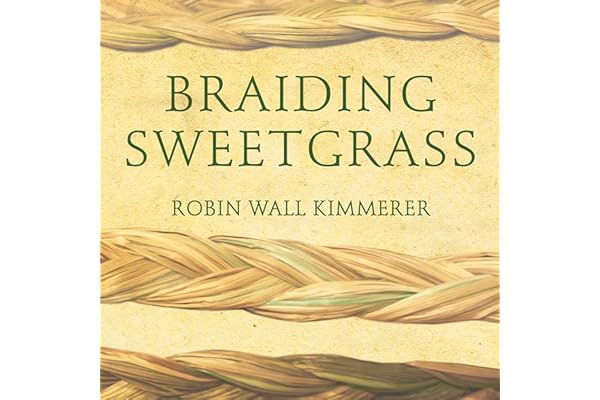
Braiding Sweetgrass: Indigenous Wisdom, Scientific Knowledge and the Teachings of Plants

Braiding Sweetgrass: Indigenous Wisdom, Scientific Knowledge and the Teachings of Plants


Price: $16.92
4.7/5

(22,436 reviews)

What Customers Say:

  • 20 Stars! A profound, moving, informative book with achingly beautiful prose
    Braiding Sweetgrass is one of the most profoundly moving and illuminating books I’ve read in a long time. Kimmerer is a distinguished professor of Environmental Biology and an enrolled member of the of the Potawatomi Nation, a northern tribe whose ancestral lands are around the Great Lakes. Broken treaties with the US Government finally forced them to move to Indian Territory in Oklahoma.Sweetgrass is translated as the “sweet smelling hair of Mother Earth” and represent the union of mind, body and spirit. In the preface, Kimmerer describes the book as “a braid of stories to heal our relationship with the world.” She weaves together science, spirt and story “that can be medicine for our broken relationship with earth.”Each chapter is to be savored and read slowly. Her prose is achingly beautiful, moving me to tears of wonder as she describes the interrelationship of various plants, such as the brilliant symbiosis of ‘The Three Sisters,’ beans, squash and corn. Or – the amazing life cycle of the pecan tree or the many uses of cattails; who knew?I was also moved to tears of grief when she describes the horrible legacy of the Indian Boarding Schools in the late 1800’s. The schools were a form of cultural genocide, but the stories, wisdom and knowledge of native lifeways went underground and endured, a testament to the resiliency of native peoples.The basic premise of the book is reciprocity and an ‘I – Thou’ relationship with all of creation, to borrow a phrase from Martin Buber. The land gives back to us when we care for the land. Plants, animals, insects, etc. – are all ‘family,’ and one is much less likely (or at least, think twice) about inflicting harm when the relationship is personal, heartfelt and genuine.Gratitude is the other overarching theme, which is strongly rooted in Native cultures. She describes the Thanksgiving Address of the Haudenosaunee Confederacy, which begins a school day or before an important meeting. It is gratitude directed to all of the earth’s species on land and water (including water itself.) The entire address can take up to an hour, as thanks is bestowed upon each element. Each segment ends with “Now our minds are one.” If you don’t read the book, I recommend looking up the Thanksgiving Address. It can be shortened to incorporate into a daily gratitude practice.In my view, this book is a masterpiece of ecological, historical non-fiction. It is inspiring and hopeful; a call to action. As Kimmerer says…”we are the ones who will bend to the task of putting things back together to rekindle the flames of the sacred fire to begin the rebirth of a nation.”
  • Poetic Prose Detailing Our Responsibility to Mother Earth
    Robin Wall Kimmerer is a botany professor and enrolled in the Potawatomie nation. She calls herself a poet, and her prose is indeed poetic. While reading, I felt like I was sitting and listening to an elder tell stories. In the Ashininaabe origin story (the tribe by which Kimmerer lives in upstate New York), Skywoman fell to earth landing on the back of a turtle, which carried her to dry land. In her pocket were sweetgrass seeds, and thus, sweetgrass became the founding plant of the people. Sweetgrass becomes the metaphor for how the people are to care for the land and in return, be sustained by it, because sweetgrass has to be tended by humans for it to thrive. In return, it provided many tools to sustain the people: sustenance and material to use as survival. The book is divided up into five sections in the care and use of sweetgrass: planting, tending, picking, braiding, and burning. Since sweetgrass is so important to the life of the people, it can never be sold: it must always be a gift. A gift is given, w/ no expectation of reward. You’ve done nothing to earn it. Your role is to be “open-eyed and present.” (pp. 23-24) “From the viewpoint of a private property economy, the ‘gift’ is deemed to be ‘free’ b/c we obtain it free of charge, at no cost. But in the gift economy, gifts are not free. The essence of the gift is that it creates a set of relationships. The currency of a gift economy is, at its root, reciprocity. In Western thinking, private land is understood to be a ‘bundle of rights,’ whereas in a gift economy property as a ‘bundle of responsibilities’ attached.” p. 28. Therein lies the fundamental conflict between colonizing and indigenous peoples throughout time.I particularly enjoyed Kimmerer’s chapter on restoring a pond on her property. It had silted over, grown over by strangling plants. She worked for years on this pond, losing and winning different battles w/ the invasive species. The passage of time was marked by the growth, aging, and finally, death, of her pup, whom she buried beside the restored pond. “The pond built my muscles, wove my baskets, mulched my garden, made my tea, and trellised my morning glories. Our lives became entwined in ways both material and spiritual. It’s been a balanced exchange: I worked on the pond and the pond worked on me. and together we made a good home.” (p. 95) What a metaphor for reciprocity! “…reciprocity is imperative for long-lasting, successful restoration. … Humans exercise their caregiving responsibility for the ecosystems that sustain them. We restore the land, and the land restores us.” (p. 336) “It’s our turn now, long overdue. Let us hold a giveaway for Mother Earth, spread our blankets out for her and pile them high w/ gifts of our own making” – books, poems, paintings, compassionate acts, clever ideas, and “perfect” tools. “The fierce defense of all that has been given. … Whatever our gift, we are called to give it and dance for the renewal of the world.In return for the privilege of breath.” (p. 384)What a lovely – and sobering – book. 5 full stars.

Braiding Sweetgrass: Indigenous Wisdom, Scientific Knowledge and the Teachings of Plants is one of the best-selling products with 22436 reviews and a 4.7/5 star rating on Amazon.

Current Price: $16.92

#5

The Untethered Soul: The Journey Beyond Yourself

The Untethered Soul: The Journey Beyond Yourself


Price: $13.54
4.7/5

(43,155 reviews)

What Customers Say:

  • get in touch with your inner self!
    This book is the modern day guide to getting in touch with your inner self. While reading it, I came to recognize two different entities inside of myself. One does the talking and one does the listening. The talker (my ego) talks a big game. He is unabashedly bold and thinks his shit don’t stink. The listener (what I have come to understand as my true self) is bad at pushing back against my ego when it goes too far. Reading this book brought the relationship between these two aspects of my inner self into a realm of greater personal understanding.This book also really made me appreciate the tremendous power of the mind. Singer uses the allegory of a house in a beautiful field to describe how many of us live our mental lives. The house is “all your past experiences; all your thoughts and emotions; all the concepts, views, opinions, beliefs, hopes, and dreams that you have collected around yourself.” We stay inside our houses because they are safe. But, if we manage to open a window, or break down a wall, we would be faced with the beauty of the outside world. This of course goes hand in hand with change. Breaking down the walls of our conceived houses is equivalent to embracing change and facing our fears. In practice, it is very difficult to do because fear is scary. If we can manage to get to the other side of it, however, and see our fears in a different way and change our thoughts and perceptions that surround it, the field of view is truly breathtaking.The theme of succumbing to our fears comes up a few times, as Singer notes that “if you have a lot of fear, you won’t like change. You’ll try to create a world around you that is predictable, controllable, and definable.” He goes on to say how in reality, “fear is the cause of every problem. It’s the root of all prejudices and the negative emotions of anger, jealousy, and possessiveness.” Anybody familiar with Star Wars should be hearing Yoda in their heads right now telling young Anakin Skywalker how “fear leads to anger, anger leads to hate, hate leads to suffering” (and ultimately to the dark side.) Singer and Yoda are saying the same thing: If you let fear be in the drivers seat, you will spend your life perpetually unhappy, always trying to shape external events to fit your internal narrative and soothe your psyche. The way through this is to embrace change and recognize that “if you really want to break through, you have to be willing to just watch the fear without protecting yourself from it. You must be willing to see that this need to protect yourself is where the entire personality comes from.” Fear is what builds the allegorical house. If you want to step outside and feel the warm sunshine on your skin, you must accept that life is full of scary things and you can realistically do very little (oftentimes nothing) about it.I have noticed this in my dating life. When I’m dating somebody who I really like a lot, and I get scared of losing out on a potentially great relationship with them, I act in ways that often encourage that very outcome. When I date with an ‘I’m going to be my best self and let the chips fall where they may’ attitude, I am always comfortable with the result, regardless of whether it is successful or it doesn’t pan out. I have noticed it in my professional life as well. When I was a younger artist, I used to have tremendous fear that people would never listen to my music or read my writing, and so I sat on it. Eventually I couldn’t anymore and I started putting my creative self our there into the world and the results have been inspiring and encouraging. I now have no fears about how my art will be received because I create it for myself first and foremost. I have also noticed fear in the political actions of friends and relatives. A lot of my family members are Democrats and support the Democratic Party here in the United States. The media uses fear to make them scared of the big bad Republicans and what they might do if they gain too much power. It leads them to hate members of the other political party. My own sister thinks all Republicans are racist, sexist, and homophobic. How many Republicans does she actually know in real life? Not many, most likely none at all. Republicans are the same way, stoking fears of Socialism in order to strengthen their party, which, although effective, also causes their constituents to hate liberals. Everybody is building houses in order to protect themselves from things they are scared of, when it seems to me that we should be breaking the walls down and embracing change.This book taught me to take notice of my internal energy and gave me confidence that dealing with it is always the better route to take instead of hiding it and letting it fester. Last year, when I turned 30, I booked a flight to Atlanta, Georgia, to visit an old friend from childhood. He turns 30 about two weeks after me and we hadn’t seen each other in years. Sadly, our relationship wasn’t quite what I expected, and we were not as emotionally available with each other as I had hoped. He said some things and acted in some ways that didn’t sit right with me and instead of talking about it, I buried it in an effort to make the short trip as fun as possible. When I got home, I told myself I would wait a week or two and then call him up to talk about it. I ended up waiting 8 months! We communicated many times over those 8 months and I never brought it up. It chewed at my psyche for the entirety of that time, and now that the experience is in my past, I feel downright stupid for letting it sit within me for so long. This man was my best friend for the first 18 years of my life (before college sent us in different directions) and even though we were not as close as we once had been, I was scared to talk openly and honestly with him about my feelings. Because of this, my inner monologue kept me up late on many occasions and bothered me constantly. Once I got the courage to speak with him he was open and receptive to my thoughts and we shared a lovely two hour conversation about the birthday trip and moved past it. I came to this book much later, but the ideas Singer proposes struck this chord with fervor. If you harbor energy that you know is making you emotionally unhappy or unstable, the best strategy is to find a way to release it. Usually this means sharing it with a loved one and finding strength in empathy. It also means finding empathy for yourself. I now make a practice of approaching uncomfortable topics as soon as I recognize them within myself because “stress only happens when you resist life’s events.” My life is infinitely better because of it.The way forward for me in overcoming my external fears and soothing my internal stressors has been about recognizing when my ego is talking and when my listener isn’t talking back enough. This, I believe, is the essence of this book. Getting in touch with yourself is the pathway forward through the trials of life because life will be stormy no matter what you do. Who you are in relation to the storm is what counts.
  • All you need to quiet the voice in your head & live consciously
    I have read Tolle, Deepak, Pema Chodren, Thich Nhat Hanh, Gary Zukav & more. Although all of these are very good also, I’d say this book is the most useful, most practical, easiest to understand & actually apply to your life. Michael S. gives lots of fantastic, intelligent examples to make sure that we fully get it. I first bought the MP3 CD for listening to while: walking, exercising & in the car. It was sooo good, that I ordered the book also, so as I could hi-light many areas & refer back to them often, as a quick summary. I recommend the audio first, as Peter Berkrot, the reader, is superb at applying the exact intonation where needed which is extremely helpful in getting the many important messages across. All audio books should be read by him! I almost thought that Michael S. was reading it, as they sound similar, which is better. Some audio readers do not suit the book, but not in this case. Every inch of the book & audio is profoundly productive…you get every penny’s worth. It is by far the best value I have ever received in audio/book. It does not sound like psycho babble. Michael obviously lived this all himself, & in order to calm his own mind, he realized what needs to happen. He is the only one that has successfully explained what living “consciously” means & how to actually do it. You will learn how to deal with “the voice in the head”, mind/heart pain, guilt, regret, fear, worry, death & more. He explains what “spiritualty” & “enlightenment” really is, for the regular person. He does not dwell on this, just mentions it a couple of times. He gives very useful suggestions of how to be happy. I wish I had known about this book sooner. It encompasses key concepts that I have had to read several books to get a lesser understanding of. I don’t think Michael knows himself how good this book is. Watch a re-run of Oprah “Soul Sunday” to see Michael Singer’s interview. I want to say so much more but I want to read the rest of his book. I use the audio(in bed)to quiet my mind after a busy day to ready the brain/mind for sleep. The book is not by any means “sleepy” (!!), it helps to remove the guilt & gives you permission to quiet your thoughts, so as you can consider sleeping. Ladies…try this audio before bed rather than Melatonin (that is being over dosed on). I comb every word he says. Oprah passed it to all of her friends after she was given it by a friend (but you don’t have to be an Oprah fan to enjoy & find extremely useful). This book will be my guide for living.

The Untethered Soul: The Journey Beyond Yourself is one of the best-selling products with 43155 reviews and a 4.7/5 star rating on Amazon.

Current Price: $13.54

#6

Inside the U.S. Government Covert UFO Program: New Insights

Inside the U.S. Government Covert UFO Program: New Insights


Price: $23.99
4.8/5

(12 reviews)

What Customers Say:

  • Outstanding Continuation of the Series
    Having devoured “Skinwalkers at the Pentagon” and “Initial Revelations,” I had been looking forward to this volume for some time. Part 3 in the series does not disappoint. Lacatski mostly focuses on Skinwalker Ranch in this volume but begins with a very nice discussion of the physical ramifications of UAPs and the common (five or six) observables. A nice chapter on UAP materials analysis is included with what said technology could entail for future human technological breakthroughs. Along with its predecessors, this book is absolutely required reading for anybody wishing to seriously engage the topic of UAPs. Lacatski is in a cutting edge position, having been one of the key figures in the government-sponsored AAWSAP-BAASS program that took place between 2008-10. The UAP observable data as well as the paranormal phenomena that commonly impact those that encounter these craft have something to tell us not only about UAPs, but also about the nature of reality. Books such as this one bring us another step closer in understanding the phenomenon.
  • Insights galore, read between the lines
    Very informative book that answers many questions that researchers have had. My only request to Dr. Lacatski is please do more interviews with podcasters and maybe even offer a little speculation even if that goes against your scientific method, specifically how does this phenomenon align in a positive or negative way to your own spiritual beliefs. Please go on Jesse Michels podcast. Every one of your books are great, please keep them coming.
  • UAP technical info
    Good read about insider information about crashed space craft. Interesting info on the chemistry and composition of materials from a crash vehicle. Wish we could see the stuff still classified.
  • Important follow up information.
    Great book! Please don’t wait so long to publish the next volume.
  • Too many abbreviations!
    This is not what I expected. I have not seen a book in my life with more abbreviations! There are two and a half pages of abbreviation explanations. Crazy

Inside the U.S. Government Covert UFO Program: New Insights is one of the best-selling products with 12 reviews and a 4.8/5 star rating on Amazon.

Current Price: $23.99

#7

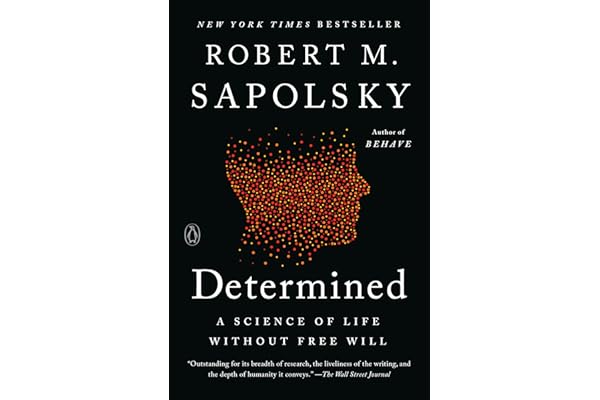
Determined: A Science of Life without Free Will

Determined: A Science of Life without Free Will


Price: $12.99
4.5/5

(1,618 reviews)

What Customers Say:

  • A must-read for those who want to get closer to truth, wherever it leads
    One of the most radical, thought-provoking, moving, poignant, and viscerally haunting books about the human condition I’ve ever read.I don’t know if Sapolsky is correct that humans have no free will whatsoever–it’s his philosophical interpretation of scientific facts and he admits philosophy is not his strong suit–but he makes a damn strong and formidable case not only for no free will but for the abolition of the criminal justice system, discarding the very notions of blame and praise, etc. and what might replace that.I think this book will make anyone a more compassionate and less judgemental person just having had to wrestle with Sapolsky’s arguments and all the scientific facts gathered (and he says most of the studies he cites are from the past 5 years, and he cites a lot).For some, it will probably induce an existential crisis and challenge core beliefs that many people take for granted. Sapolsky himself approaches this with humor trying not to be too depressing and heavy, but also seriousness, he admits where he thinks he could be wrong and he struggles to wrestle with all he’s learned and come to believe about the nature of the universe and our place in it in his many years as a scientist and professor (and before), and the book gets very emotional near the end with Sapolsky talking about his family members killed in the Holocaust, struggling with his own feelings of hate, experiences working with defense attorneys and their clients, etc.The book is chock-full of science but at its core it’s a professor, seeing himself as nothing more or less than another cog in a vast machine, but with a heart that cries out for humans to be more understanding of one another and society to be more just, even if that seems impossible. He himself is aware of the paradox in that and ponders it. And he’s both cynical and very hopeful and optimistic. We used to burn witches, now we don’t. We used to think people with schizophrenia and epilepsy were possessed by demons, now we don’t. Each time subtracting responsibility and focusing on addressing root causes of behavior made society kinder. It’s very political, and I suspect for a long time it’s going to be hard to think about politics again without thinking about this book.That all said, my only major critique is that I feel like looking at the objective facts of “all we are and do is heavily influenced by all that came before and we are built of components that work like machines” and concluding “there’s no room for humans to have any control or agency whatsoever” is a philosophical jump that’s unwarranted. Sapolsky makes a good and sincere case for why he thinks it is warranted, but I think he’s not taking seriously enough what the role of consciousness might be. It seems to me if we have any agency or control consciousness would absolutely be key to that. Ironically, I feel like reading this book gave me more agency, in that knowing all the science and arguments within about constraints on human behavior enables me to make better choices (not to judge someone, to be more patient with them, to be more understanding, for example).I’m “agnostic” on this topic (and about to read Kevin Mitchell’s book arguing the opposite), but it seems to me that humans may still have some small level of control. Like, maybe “free will” is more akin to us being on a raft hastily made by people who had no idea it was supposed to last a lifetime… And we may only have one arm, but we also have a little paddle to change our trajectory ever so slightly and pew pew gun to shoot any monsters that may pop out and menace us along the way. Food for thought!But this book is a clear 5-stars. Any disagreement shouldn’t take away from that. Worth reading and owning.
  • Great book, not for everyone.
    I really like this book, and follow Sapolsky on other mediums. This is not a book for everyone – it gets deep into detail, and it helps to understand science. For some, the idea of no free will is frightening – so don’t read his book. But once really understood, I think the idea is enlightening. Lack of free will doesn’t mean we’re just meat robots, and one can take the concept as far as is comfortable for you.
  • Turtles all the way down
    Robert Sapolsky’s “Determined: A Science of Life Without Free Will” attempts to show that behavior is completely determined and that there is no free will. His major purpose in writing this book is to advocate for a lack of credit or blame for our actions. So if you graduated from a well-respected university with a doctorate in neuroscience or ended up shooting strangers at a church, both are the result of your genetics, fetal environment, past experiences and what happened “one second, one minute, one hour, etc. ago”.The writing style is relatively engaging. Dr Sapolsky tends to be very humorous even though he is dealing with difficult topics. He also has a David Foster Wallace-like penchant for footnotes, some of which are important and some irrelevant or annoying (in one footnote he quotes an incorrect Bible verse and then makes an inaccurate snarky comment about theology). Even though I may disagree with his conclusions, the book is engaging reading, and I believe it is an important topic, as the consequences for society if there is truly no free will are important.Throughout the book Dr Sapolsky wants to have it both ways. At the beginning of the book he offers a scenario of a college graduate versus the janitor cleaning up at the graduation, and surmises how each person got to that point. But he knows statistically, there is probably a graduate who had a life just as rough as the janitor but still managed to be a college graduate. And there is also a college graduate, who despite every advantage in life will end up running a massive cryptocurrency fraud. Late in the book he tells the story of a prisoner who has a brother that is CEO of a company, which Dr Sapolsky related to the brother being skilled at basketball which lead to a scholarship, which lead to business opportunities. We are meant to believe that no where along the way did either of them have any meaningful input into the outcome. Regarding schizophrenia he rejects the “overbearing mother” explanation, but then states that only 50% is genetic. So the other 50% is environmental, including the environment created by the parents.Also, I think he does not go far enough in how to design a society without free will. I understand his purpose is to advocate for more humane forms of criminal justice ( more like taking a car with faulty brakes off the road, rather than the current system of making the consequences of crime really unpleasant). In a chapter about how change happens, he states that “we don’t change our minds, Our minds… are changed by the circumstances around us” Most people would agree with the second statement, so shouldn’t we be designing societies where people are less inclined to commit crimes in the first place? Doesn’t part of that involve “corrections” for undesirable behaviors? And in a free society who decides what behaviors are undesirable? Outside of criminal justice, what do parenthood, education, government and economics look like in a world without free will?

Determined: A Science of Life without Free Will is one of the best-selling products with 1618 reviews and a 4.5/5 star rating on Amazon.

Current Price: $12.99

#8

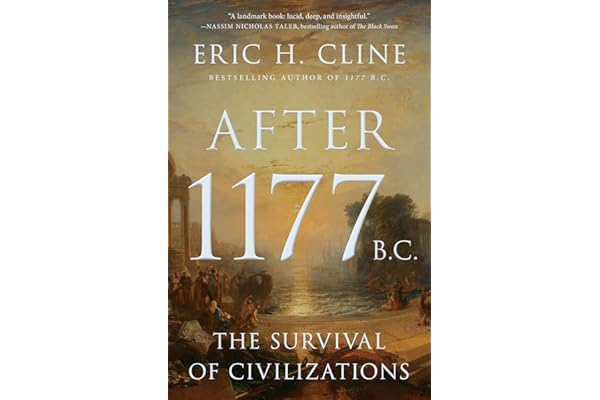
After 1177 B.C.: The Survival of Civilizations (Turning Points in Ancient History)

After 1177 B.C.: The Survival of Civilizations (Turning Points in Ancient History)


Price: $17.05
4.4/5

(361 reviews)

What Customers Say:

  • Easy read, great for learning about the past
    Excellent read. I’m finding out that history is more than interesting. Easy to understand and follow. References are great for expanding your interests.
  • Interesting, quick read. But could use maps and quantitative support for arguments.
    Cline’s first book 1177 BC essentially argued that there was a bronze age collapse about 1177 BC, perhaps in part because some peoples starting using iron instead of bronze. Also, there was drought, war, etc, which caused the collapse of great societies like ancient Egypt.In this sequel, Cline kind of reverses course a little, and says, “Well, maybe things didn’t completely collapse. Maybe, some societies along the Mediterranean kept on going”. So this “dark age” was completely dark. The book could benefit from maps to show the areas he is talking about. Also, he argues using words, but no numbers or figures. If there was a partial collapse in some areas, and a more complete collapse in other areas, could this be demonstrated using graphs which show the total population of each area over time? Of course, it’s hard to know this, but if you really have no idea about how many people live in an area, how can you say there was a collapse? If you are arguing a complete or partial collapse based on trade networks, etc., can you demonstrate average number of ships travelling between various ports over time? Or numbers of artifacts coming from overseas? Could you create a map which displays population density in each region over time? Could you show a map which would display literacy in each area over time? (apparently, there was a loss of literacy in the Greek world after linear B and before an alphabet based on Phoenician script). I get that it’s hard to get all these numbers. But, if you can’t quantify all of this stuff, isn’t this all a bunch of hand-waving, to say “well, things collapsed a lot in some places, and not so much in other places”.
  • History buff
    Love History and to read. Came in excellent condition and delivery.
  • Not an easy read but fascinating history.
    This is an almost scholarly book with hundreds of citations to support the author’s statements. If you’ve ever heard that the ‘mysterious Sea Peoples’ were responsible for the ending of the Bronze Age kingdoms you will be severely corrected. The end of the Bronze Age and the Beginnings of the Iron Age civilizations is a complex and varied story. The author did a good job of discussing this story by region to keep it understandable but that isn’t entirely possible because the different surviving kingdoms and new civilizations are very intertwined. Again, 200 years climate change played a big role in the Bronze Age collapse with many kingdoms running out of food and then losing their citizens and then being overtaken by other kings with an historic grudge. But, other kingdoms and social networks survived because they were not as affected by the climate change and could live (and farm) without their king. Or, they had learned to create international style trading corporations that were more flexible and robust than the previous trade amongst kingdoms. This robustness grew as civilized society became more ‘complex’ in a mathematical way. During the Bronze Age, trade was mostly between kings who wanted things like gold, pearls, wood for their self-aggrandizing structures, and metals for war goods. After the Bronze age, trade was about what all peoples needs for housing, roads, food, and, of course, war metals. I’m sure beer and wine are a big part of trade too! Trade became more robust because it was about serving the various real life needs of everyone – not just the elite kings and priests. Complexity bred robustness. The author talked a little about this but from my reading he really doesn’t understand the concept. Kudos though for him discussing it. This social complexity was also working in the general civilization. In fact, one of the main non-complex societies, Egypt, began their long term fall during this period. The advent of a universal alphabet was also part of the growth of this period. During the Bronze Age a universal alphabet was not needed because, well the kings didn’t have the time to learn anything new. But, during the Iron Age, trade was between traders, no so much kings, and a universal alphabet seemed a good idea. And, it greatly aided in the robust, complex, growth of European civilization. Again, in this book there is very little discussion of the common peoples, farmers, wifes, households, slaves, and others. I think part of this is because there is little archaeological record but also, it is because archaeologists and historians don’t care about the common people of the age. Who wants to study the poor and the merchants when there are mummies, soldier graves, gold and ceramics, and large administrative stone structures to uncover! Even so, I learned a lot about western and near east history. I wonder what was happening in the rest of the world?
  • A book about the Iron Age winners and losers should include more about iron’s role
    While I think Cline makes sound arguments about why some Near Eastern and Middle Eastern civilizations thrived rather than just survived in the early Iron Age, there was little discussion on what role iron itself played in these varying outcomes. For example, is it clear the Iron Age “winners” manage to take better advantage of the new technology than the others, either through earlier and more widespread adoption, enriching themselves by controlling the sources of iron ore, its trade routes, or developing a reputation for producing superior iron products? There’s some discussion the Cypriots and perhaps the Phoenicians did so, but nothing comprehensive about the role iron may have played in the outcomes of the other cultures discussed. Perhaps there’s not sufficient archeological evidence for a more general discussion on this point but it seems negligent on Cline’s part to not mention it needs to be more fully investigated.
  • Great book
    Great book, highly recommend anything by him on this subject.
  • Even When History Ends Things Go On!
    This is a good follow up book as what happened after the end of civilization in 11777 B.C. book. The findings since my college classes in the late 1970s have re-written the development of the Iron Age. It is fascinating how the different peoples handled coming through, transition and adaptation to the new conditions and lengthy drought. Recommended
  • Stalling, Staying or Starting Over?
    A moral tale, told with expertise, intellectual integrity and well-bundled information. This is a sequel with a story of its own to tell.

After 1177 B.C.: The Survival of Civilizations (Turning Points in Ancient History) is one of the best-selling products with 361 reviews and a 4.4/5 star rating on Amazon.

Current Price: $17.05

Updated: Nov 28, 2025
Data from Amazon.com
8 products